sexta-feira, 31 de agosto de 2018

The best star wars movie


The last Jedi is my favorite movie of the current era Star Wars (the Disney ones). It managed to correct most of the issues I took with its predecessors, like the predictability and the dependency of well-known in the franchise plotlines and characters in the force awakens, or the lack of meaningful character arcs of rogue one, while also adding some ambitious themes and ideas, which were pretty much never seen before in the franchyse. The following essay will detail my impressions of the movie, and as such it will spoil the heck out of it.


Resultado de imagem para the last jedi TJ

(Kind of found relatable, how this guy was almost literally saying fuck Star wars and its ideals)


The biggest idea of this film is how to deal with the past, usually abstracted to dealing with the mistakes committed previously, and the fact we are inevitably going to end up committing them again. Said conflict is perfectly portrayed through our title character the supposed last jedi, Luke Skywalker, a deluded man waiting on death for himself, and the order he represents, incapable of moving on and helping anyone. His apparently uncaring demeanor for others is warranted though, it comes from a bigger conflict regarding merits of his existence and of the jedi order. His questioning comes in the form of establishing a myth parallel, both him and the jedi became mythical infallible existences in the people’s eyes. But what is the worth in the existence of such mythical perfect entities, when in the past both committed and will keep committing mistakes, inevitably failing to the people of the galaxy and to apprentices who fall to the dark side? Luke’s resolve at the end of the movie shows him having a more positive relation with his own failures, by making him not only linger on its horrible aspects and using it as an excuse for not even trying, but instead as means of learning important lessons, passing those to others and even correcting some of the damage caused.


Rey and Kylo Ren are also struggling on how to deal with the such issues in the movie, Rey constantly looks for who are her parents, hoping that her heritage would define her identity as an individual. Kylo Ren’s character is defined by figures of the past, being both Luke’s failure in being his master, and his own failure at becoming Darth Vader. Those failures led him to a completely negative view on heritage, which is showed by his posture and ideology at the end of the movie, trying desperately to forget everything that came before him and erase its existence, him literally quoting "let the past die, kill it if you must". Rey solution to the issue consists not of forgetting or erasing previous events, but accepting it all even the unpleasant truth about her parent’s identity, but still strive to move on, make your actions in the present define who you are, and what will be her part in the grand scheme of things (or at least I think so, the movie was never really clear on Rey’s final stance for some reason).
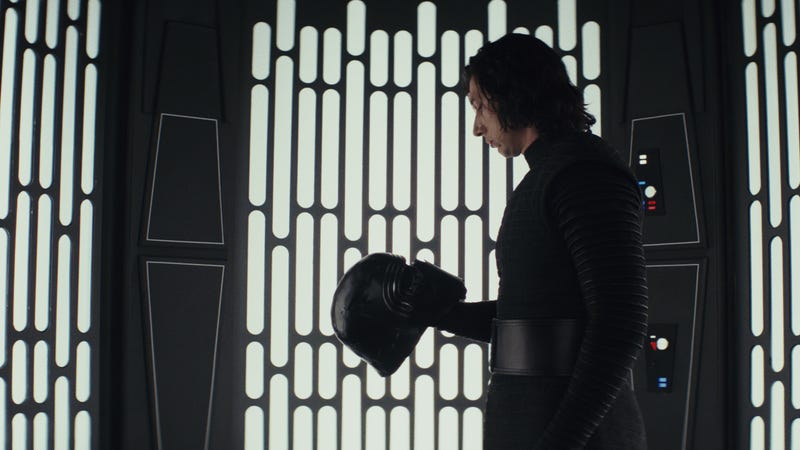

Resultado de imagem para the last jedi

(My favorite emo nazi)


The questioning of why the jedi as a myth and institution should be maintained despite being really flawed is only answered at the movie’s ending moments. The scene in question shows previously presented slave kids playing with toys one of them being of the legendary jedi Luke Skywalker, while wearing the rebellion symbol. And it is as a symbol, that the movie is saying the mythical elements of the past are really important, the myths regarding the rebellion and the jedi order are shown here to be important as symbols to motivate people, get them to look at the sky and dream of something above their reach, to inspire this new generation to go beyond and try harder, at achieving whatever things they may want. This inspirational aspect of idealized institutions like the jedi, is portrayed as way more important than their real fallible existence. And that is the movie answer to Kylo Ren destructive tendencies, sure simply burning everything and pretending the past no longer exists may be an easier choice, but it also ignores all its potential of positively changing the present, which is pretty ironic since Kylo Ren himself is an example, of a kid inspired by a mythical figure to become who he is now. It is hard not to die this whole discorse, with the nostalgic glorification of past Star Wars found in a new hope. On a way this messier, more nuance view on past, where we stll view its merits, while alsoi admiting its flaws is the movie direct answer to that. On a way Kylo Ren is talking about the legacy of the Franchise, when he claims to let the whole thing die to move further. A view the movie is certainly not advocating for, with its reaffirmation of what the instituitions anc characters represent.


Resultado de imagem para the last jedi luke lightsaber cliff

(Luke throwing the lightsaber, the symbol of the nostalgic bullshit of a new hope, off a cliff, is such a great scene)


On another topic this movie tries to showcase an ideological basis for what the resistance stands for, which is good after 5 movies (yes the rebellion and the resistance are the exact same thing) of them being only the guys which were against the empire (first order), and believed in the force. The ways it does so is not so great really, this idea is implemented through Finn and rose plotlines, which I have to say are not as interesting or really have any real purpose on the movie. Their whole go to the casino, find the codebreaker and disable the tracker plotline really added nothing or had much purpose in the grand scheme of things. They achieved nothing by doing this, nor it helped the rebellion, or had any significance outside the two characters involved (and Phasma), it could had been completed gutted out, and the plot of this movie would be almost the exact same. It does move the character arcs in significant ways though, Finn learns to stop worrying only about himself or Rey, starts caring more about others and finally officially identifies himself with the resistance (even though the movie starts by ignoring his character’s urgency and making him go to help the resistance anyway), his act of even willingly try to die for the rebellion, being a great example of that. But really what said plotline has to showcase of what the rebellion stands for, is really not worth the waste of time, it is in general. It does say that the rebellion represents all the oppressed class of the galaxy, freeing slaves and abused animals supposedly represent that, and their way of fighting, has more to do with love, protecting what they love, than destroying what they hate. In the end it amounts to making them the rebellious group that fights for love and the oppressed, which is still not making much of differentiate and giving them an ideology as a group. It also adds nothing to other themes this movie has going for, how to deal with the past, while also managing to directly contradict the criticism of black and white morality this movie seems to be going for.


Moving on, this is the part I have to admit this movie gets kind of tricky to understand in everything regarding its treatment of the force. The jedi and their teachings are completely different in here than what the prequel guys seemed to preach, first because Luke keeps constantly telling for Rey to channel the force through her emotions, which is exactly the way which the way the sith are supposed to use the force. Emotions like anger, fear and hatred are all the time quoted as the way to the dark side, while the jedi proclaim that a peace of spirit is the correct state for dealing with the force. I also am not sure if they just flipped the whole balance concept, from it representing the nonexistence of dark side users, since those represent imbalance in the force, or the coexistence of both sides as integral parts of the force, Luke seems to be saying the former with his definition of the force being everything and containing both perfect light and darkness, but directly contradicts it, by saying that in the time where there were no sith, there was balance. It also gets the whole, jedi are altruistic, while sith are egoistic monsters crazy for power, completely wrong. Luke Skywalker does not have a single altruistic act until the movie’s climax. Kylo Ren is far from acting out of pure egoistical desires, his ideal new order is supposedly motivated for the wellbeing of others, nor he seems to have any fixation on power, or getting stronger now, which is also a sith mark.


All of which begs the question, are those mistakes proof of the creative team lack of comprehension of the dualistic conflict of the force? And to that I have to say no, those represent what I think to be a bigger commentary the movie had towards the Star Wars franchise. The best place to see that is in Finn’s side plot with a character most people would deem as insignificant, the code breaker. More specifically his speech of both the rebels and the first order being a part of the same war machine. And that ideas like one side being the good guys while the other are the bad ones, are just rationalizations of the people involved in the conflict, in order to feel better about their actions. By blurring the lines of both the jedi and the sith ideological basis the movie is attempting to say the same for the jedi sith conflict, that the usage of ideals like light, dark side are also just attempts to justify the jedi. The portrayal of the jedi as decadent, flawed and even apathetic to the suffering of others, and of a new more humane dark side user, which supposedly aims for the best of the galaxy and really has several moments acknowledging his flaws are the framework for this newly morally more grounded complex conflict, the movie is trying to set up. The destruction of the ancient jedi texts is also a very telling moment, it signifies that no longer the definitions and concepts presented in those texts are useful to represent the current conflict, only serving to stop Luke from doing what he must. It would be a brilliant idea and development for Star Wars if the freaking film did not contradict it by having a pitch perfect version of a resistance, that only fights by saving those they love and represent the oppressed, or for the first order to still appear as the same genocidal fascist organization, so good luck presenting a morally complex conflict with those sides.


In conclusion there are lots of other smaller things I really liked about this movie, like how this movie seems to acknowledge a lot of the criticism of the force awakens and cleverly incorporate commentary on them into the narrative, like the whole discussion about why Kylo Ren lost to someone completely unexperienced on light saber fighting. How it uses the audience’s expectations of these new set of movies only being retreads of the original trilogy, making a structure that would at first confirm these expectations which in turn makes the story twists even more surprising. Or the way this movie never shines way from showing characters failing horribly in a lot of what they attempt, just to drive the theme of how to deal with mistakes, and constantly has characters developing and learning with said mistakes, Poe being the biggest example. These are all things I really appreciated but what really sells the movie for me is how authentic it ends up felling as an experience, with rogue one and to a larger extent episode 7, both end up felling like movies elaborated by a joint commit only looking on how to make the most crowd pleasing product, guarantying a safe profit apparently being their metric of great entertainment. The last jedi for me never felt like that, the fact it was scripted and directed by a practically unknown guy in the industry, which already shown bigger risks being taken in its creation. What I watched definitely feels like a more personal completely different vision for Star Wars, and despite how baffling and messy some of its parts may be, I still enjoyed a lot the fact this is the kind of movie we ended up getting.

 Resultado de imagem para the last jedi luke holdo sacrifice

(People who can not appreciate, the awesomeness of complete retarded moments like this, you have my condolences)


quarta-feira, 29 de agosto de 2018

Black Mirror episode analysis


So today after a lot of debate with myself, I am finally starting my analysis of the TV series Black Mirror. This act is actually motivated by me having recurring issues with the series, that no one else seemed to be noticing or willing to talk about. I will be doing this with a series of texts focusing on each episode of the show’s new season, while also elaborating on my overarching criticism of the series as a whole.


As you could all expect, the first thing I will be talking about is the beginning episode of the fourth season, USS Calister. Just to clarify something first, I am the biggest fan imaginable of Star Trek, especially the original series, and yes this is absolutely crucial information to understand my view on the episode. So in regards to USS Callister’s premise, I feel obligated to point out how brilliant it is, it is quite likely the best episode concept in the entire series. The idea of having Black Mirror and taking into account what it all represents, as one of the more cynical and pessimistic views of humanity’s future possible dedicating an episode to study and comment on Star Trek, which is quite literally its complete opposite. Which is regarded in the cultural zeitgeist of your age as the definitive utopic optimistic representation of humanity’s future is an incredible idea. The ethos of both series is just so diametrically different, which is shown really well in the ways something like technology is portrayed on both series. In Black Mirror technology and its implications are only portrayed on the way they dehumanize people, how they are only a tool bringing suffering and issues to our society (yes, I pretend to write more on the topic of this show bullshit technophobic attitude on my next text). In Star Trek technology is more akin to a tool which serves as the means to potentialize humanity to their full capacity, it being the means that enable them to start the biggest adventure in humanity’s history, the exploration of space. Sure some of its negative aspects like its potential for destruction or to replace mankind also gets to be portrayed (guess which one of this has a more nuanced portrayal). So, this is really a promising premise that could go in so many great ways, imagine how awesome of an idea would be to study how did society views of the future changed from the 60`s? Or even better a really ambitious team could have tried to dissect the core of Star Trek, studying its idealism, putting the visualization of humanity presented at Star Trek at test, using the cynical perspective of the series as a framework for that study.


Resultado de imagem para black mirror uss callister
                      (At least they tried copying the best, I guess)


But yeah, you will not be seeing be seeing anything of the immense potential I wrote above in the actual episode. Star Trek, its imagenery (which weirdly contains references to various entries in the franchise, even though everything else is related only to OS), the series structure and conflict, are not being used here because Black Mirror wants to study any ideals Star Trek has to offer. They are here only to portray just how much Star Trek is simply a misogynist power fantasy for insecure virgin adult males. So basically using it as a fancy backdrop for misogyny and escapism is this episode brilliant intent. You can pretty much get the portrayal of how indulgent this scenario is going to be, in the its opening minutes. They consist of a boring guy called Capitan just being a fucking genius by destroying an enemy ship, and receiving tons of praise and affection from everyone around him. Yeah, this what Star trek is guys, and just to make sure people got the subtle message, that they were trying to make this reality a power fantasy for virgins, of course they have to include bullshit like nobody in this world actually having sexual organs. Which you end up finding later in the episode, is literally the plot. The whole place where this star trekky universe exists is just actually a virtual reality, built by a genius programmer, for the purpose of literally escaping his work related stress and even going to extremes in the fantasy he created, such as creating artificial replicas of his coworkers and locking those replicas against their will, in this universe where he acts as a God.


So yeah this scenario has not much to do with actual Star Trek to justify the heavy usage of elements borrowed from the series. You could put this is any generic space opera and not much would be lost in terms of themes. Heck making this a commentary on gaming culture would make a lot more sense, what it has to say relates way closely to the current state of that than to OS. But of course, they just present the parallel with gaming lazily at the finale and do nothing with it. There are attempts to justify this better though, the commentary on women`s representation being the best example. Several aspects of women unequal representation on 0S are called out by this episode, they do not have the right the take weapons on the missions which gives the view of them not being capable as fighters. Their uniform clearly is way different than the ones from their male counterpart, only serving to objectify them in the minds of the audience. The fact most women in OS are only added as token romantic interests, but are pretty useless otherwise is also being pointed here. Rightfully so may I add, the way women are presented in the Original Series of Star Trek(OS) really holds some ugly misogynistic misconceptions about women, which are actually being pointed out. To what extent this matters as an issue is arguable, looking back to a fifty-year-old Television series expecting a feminist sensibility and perspective of the 21 century is simply absurd. Those forms of presentation and usage of female characters cannot be taken totally out of the context they were created, being really common in most media of the time. So I do not think they point to an especially chauvinistic worldview (for the time).


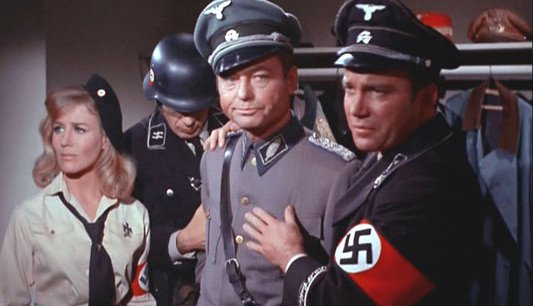
Resultado de imagem para star trek original series
                    (Can you guess which one of the shows I am writing above is the better one?)


But no, my issue is not with those valid issues the episode is raising, but with the logical leaps the series is taken in using those to reach a simple conclusion. That Star trek just consists of a safe fiction, a work whose only purpose is escapism and serves to reassure ugly prejudices of the audience. Because that is in no way shape or form the case. Star trek is actively challenging the audience with its concepts and storylines, it was never going for empty comfort in any stage or entry in the franchise, but bringing real questioning of key aspects of the human existence, while never shying away of giving the audience uncomfortable answers. What I am writing about here is the series that has the first example in America television history, of showing a mixed racial kiss between two actors, breaking an old taboo and creating lots of controversy. It is also the same series that in the height of America’s persecution of communism in the country, and fight against the Soviet Union, dared to portray a Russian as a likeable main character, which btw never stopped talking about how great places on Russia were. Really Star Trek always tackled such difficult political, social and racial subjects in a surprisingly mature way, never simply following audience’s misconceptions. So yeah seeing it all portrayed as the ultimate form of safe escapist fiction here, is not only retarded, but insulting to an unbelievable level.


This episode just really does not have a strong understanding of what it is trying to do. The whole thing just feels like it wants to eat its cake and have it too. And is doing so by wanting to pass as this serious critique of the Star Trek universe, but at the same presenting the exact same structure and conflict, completely straight in an almost glorified manner. Take the conflict we have here, a Godlike powered man-child which tries to control the enterprise (no way I am using the knock-off Black Mirror names for the same things) and its crew. This is the most recurring kind of conflict in all of Star Trek, Q the most memorable antagonist in Star Trek is exactly as I described above. It also develops and ends in the same way, by having the crew cooperating and using their wits to defeat the treat, also both end with the promise of more adventures for the respective groups. Even some gimmicks like it all being part of a virtual reality aren’t that new, considering things like the holodeck in Star Trek the next generation. Sure the crews in the Black Mirror version have more internal conflicts than anything in Star Trek, but that is it in terms of innovating the structure.


This resemblance leads to some really badly handled ideas, like Dale (the creators idea of a star trek fan) being supposed to be a commentary on the moralist gary stu captain a la Kirk. That ends up being having absolutely nothing in common with that character type, and being exactly the same as most Star Trek antagonists. It also leads to thematic dissonance, by having the show glorifying the structure and conflict by portraying it as an exciting even heartbreaking at times tale. But at the same time condemning it, as purely escapist nonsense. Between the critiquing and playing straight of Star Trek elements, I ended up with no idea, what the overall message was supposed to be. And yes you can take that as either incompetence of the production team, or this episode actually pulling some too deep for me ideas.


Resultado de imagem para star trek lizard fight
                        (Deep and mature storytelling)


You know if this episode was actually awful and completely devoid of any merit, I would not be even bothering to talk about it. Which is sadly not the case, this episode’s storytelling is actually extremely efficient. I am not kidding, setting easily distinguishable and well defined personalities for 6 main characters is no small feat, but this episode manages to pull that off. Heck it even develops in an understandable way one of said characters. It is kind of a well-executed story overall, it establishes the setting with not much exposition, it manages to increase the tension of the conflict well, while having everything culminating in a well done climax. The whole thing is paced really effectively, all the plans and situations happening through the episode are well explained and make sense in context. If you were to look only at the mechanics of story and characters, it mostly works. It is not hard to understand why people would get invested in these characters, or in the conflict and situations they are being presented. But what is the purpose those elements are all working towards, what is the essence this episode wants to transmit? Just everything I have been laying out above, which is why no matter how good some of its parts may be, the whole is thing just come off as worthless for me.


To summarize, Star Trek is a legendary series, that deserves all its cultural importance and impact. It is a legend that will keep reverberating throughout the years, achieving some of the pinnacles of timeless storytelling. Black mirror is just a fad, and inviting the comparisons, or even daring to mock such a series only helps to delineate its flaws


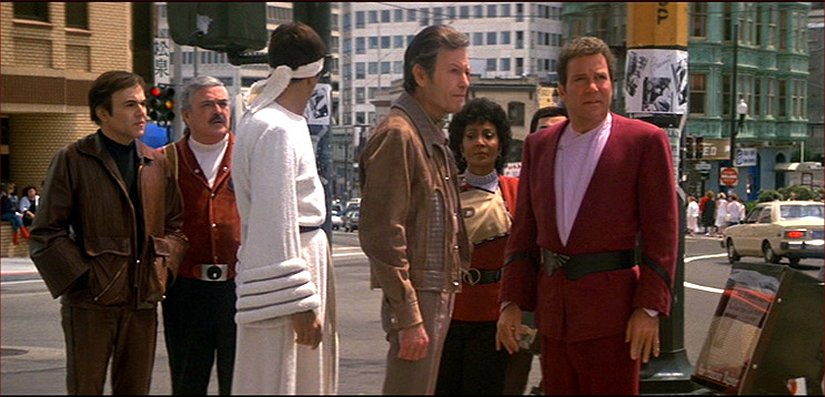
Resultado de imagem para star trek 4 movie
                    (Since apparentely there are people reading now, could you tell me if you want me to,                                                          continue this series on Black Mirror?)

terça-feira, 28 de agosto de 2018

13 reasons why it sucks and i hate it

Suicide, the act of taking your own life voluntarily. The destruction of men by his own hands, the almost illogical concept of bringing an end to your own existence, doing harm to yourself (or so Aristoteles though). To say this a controversial topic to address is a bit of an euphemism. Through all of fiction perhaps one of the tabooer subjects to portray, little organizations like World Health Organization advises against the portrayal of this kind of topic, due to passively influencing other people to commit such acts.


Resultado de imagem para 13 reasons why


This colossal and universally important aspect of life, is what the series 13 reasons why (season 1 only here) tries to incorporate, by focusing on the life and after effects of a teenager suicide. Hearing this premise and being someone with a perhaps unhealthy interest for the topic, I was excited to say the least with the prospect of such a series, especially with it reaching mainstream success, and spreading awareness and debate about the topic. Which only increased the feeling of frustration when I sat down and saw what the show had to say about this. I find it hard to even admit this show actually is about suicide in the first place, since it blatantly avoids making a commentary or perhaps the two most important aspects the act raises. Like if human beings really have the right to choose death, to voluntarily give up on life, which is counterpoised by the views of this act as unnatural, or a manifestation of some sort of disease. It also makes us question our existence itself, is existence really inherently preferable to nonexistence, and if not suicide would be the most logical course of action. Good luck finding any commentary on both in this show though, it disregards completely any sort of questioning around this, not even a one sided propagandistic affirmation of a stance is made (not even the pro-life propaganda I was actually expecting). I understand those are somewhat frightening and controversial topics to present, and I can barely imagine how controversial it would be presenting suicide as the right thing to do in a mainstream show, but is that not what media should do? To dare to show, confront and make us face all this frightening thoughts, so we can have a better understanding and idea of them. Does making them taboo and treating people who think these way as sick are we not only adding guilt and disgust to their lives, for thinking that way? Anyways the mere idea of this as an insightful analysis on suicide is insulting and demeaning. I cannot in good mind recommend this show, even as an introductory work to someone that knows nothing about it in general.


Maybe am I using the wrong perspective to judge here. Perhaps the act itself was not what this series was about but it’s after effects. Losing someone because of suicide is a hard thing, especially for those closer to the person. Everyone that believes their family and loved ones will be better off without them, should read impressions of how hard that is a process for the survivors. Having to reevaluate and judge your entire relation with someone you love, looking everywhere reasons for why she did it. The guilty of not knowing if it was something you did, that made her take such drastic actions is close to unbearable. Such aspects are portrayed even poignantly at times by Hannah Bakker parents. Nothing else in the show really correlates to this theme though. Most of the characters this show decides to focus did not have any strong relation with Hannah, if anything most of them are way more concerned with their own self-preservation in this situation than feeling guilty about how they had influence in her death. Also giving definitive answers of why and whom actually had influence in her death takes the most painful part of the process, the uncertainty. Not knowing what you could had made, which actually hurt the person’s feelings, is usually way more terrifying than the actual answers of what the persons did. Of course Clay was relieved after hearing those tapes, but by making those tapes and its content the focus here, 13 reason why loses the most powerful and meaningful aspect of the grieve and frustration regarding the central death


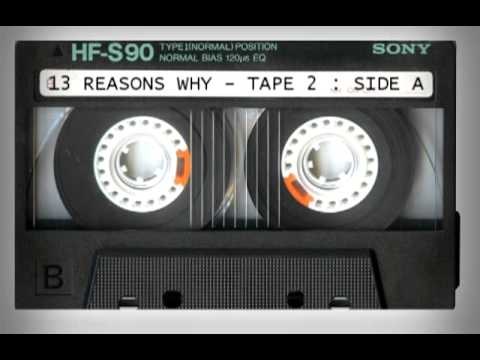
Resultado de imagem para 13 reasons why tapes


And perhaps I am still viewing this through the wrong lenses. This could not be about suicide as a topic, but simply Hannah’s situation, a tight and solid personal story. But even so this series does not work. A simple look at our title character can show the reasons why that is such. Our protagonist  uses her suicide to practice what can only be called mental torture with her fellow peers, by extensively blaming them, for what happened to her. The only reason people ignore this simple fact is because of the ridiculous portrayal.Yes, those are the terms to accurately describe her actions. There is no way around this our protagonist commits such a hideous act, against a group of teenagers, that in their majority did not do anything worthy of such response. Have you realized the problem here? Because it gets even worse, despite being the perpetrator of such immoral acts with severe consequences, the series will attempt to justify it, portraying her as right every bloody time. Hannah is showed as this pinnacle of righteousness, that could never be wrong. This by itself would make me dislike this series.  It is hard to even say the moral disgust and frustration that such acts and their repercussions left on me. It is physically impossible for me, to actually fell sorrow or pity for our title character despite the horrible things that happen to her. Which always occur because of victimization of course, Hannah never does something wrong to deserve any aggression. The whole thing come to a ridiculous point where even though the series shows a gruesome scene of her graphically cutting her wrists, I still ended up feeling nothing but emptiness (did I mentioned how manipulative this series is in regards to its drama?).


Many will defend this bullshit by claiming Hannah had some bigger messages she wanted to show with those tapes. Which there actually are, with each one fighting to be dumber and more aggravating than the last. The importance of empathy is a very prevalent one. Trying to understand how the other feels is important, if not you may never know your own actions may have severe lasting consequences in their lives. And of course the best way to portray such concept, is by having our protagonist to preach it, while lacking any understanding or care, about how an act, such as blaming and judging people for her murder, may have for those people. The hypocrisy is just unbearable. The idea of this being necessary, as means to show what actually happened to her is also laughable. There are hundreds of less cruel and sadistic ways to go about this. No, I did not forget the idea, of the whole thing, and the main point of the series, to extensively tell the reasons why someone would commit such an extreme act. The problem is though; I disagree, what is being shown in those tapes are not reasons to kill yourself. They are just facts, a single repeating kind of fact, the actions committed by the people of Hannah school that she considers prejudicial to her (with one noticeable exception). There is no psychology, no inner motivation or philosophy behind it, just a general blaming of everyone else for what happened to her. This honestly seems less of a study of reasons for suicide, and more like a historian making a list of facts that are deemed of any importance. Such an impersonal and uninsightfull perspective is disappointing to say the least. Maybe I am being a little too harsh in all of this. Of course demanding such degrees of reasoning and logic, behind the acts of a clearly emotionally destroyed teenager is completely unreasonable. I understand that, but it was the author’s idea to put that same damaged teenager ideas on a pedestal. A lot of the work consists of proving why Hannah is the only one who is right, in her version of what happened and everyone else is wrong. She also feels like the voice of the author directly delivering the messages this show is trying to portray. So if the creators themselves put so much importance on Hannah opinion, her reasoning, and to justify why she is right every time, I see no reason why I should not put the same importance on it as well.


Resultado de imagem para 13 reasons why
    (I am probably the only one that still cares about this show)


Let’s talk about this show depiction of teenage life for a change. This giant group of characters is supposed to portray exactly that anyway, the sprawling cast being necessary because all of them are supposed to represent a different aspect and side of teenage life. And to be fair this exploration has a variety of topics ranging from sexual violence, the unfair view that can be easily formed of women, lack of privacy, loneliness, suicide actually is not that much more prevalent than those ideas. Great on paper but there is something crucial missing and that is in the representation of any adult character. Well, the whole thing is very simple, every adult character and every major institution is despised and set out either as completely useless or openly malicious from the get go. The School counselor is completely ineffective in regards to anything regarding the students, the school council does not care for the teenagers well being and is just worried about the fact those kind of events can hurt the school image, and we have our co-protagonist Clay Jensen parents just laughing it up and never confronting their son no matter how stupid and clearly self-damaging his actions are. Never in the show any adult actually manages to portray a compelling counterargument, or perspective to our character’s worldviews. The series is indulging itself fully in these youngster’s ideas, to the point that the mere thought their shallow generalist ideas might not be right, never crosses anyone minds. I do not see what someone in the target audience can learn with something that blatantly panders and confirms their basic ideas, without even attempting to show any discording ones. Examples of this where constant, like the school being at fault for supposedly undermining the student’s problems, by making the most logical suggestion of trying to put the issue into a different perception, or being deemed as accusatory, to even slightly suggest, the bullied itself might be taking actions, that could be worsening his situation. So yeah fuck the adults, we crazy neurotic self-destructive teenagers are the ones that truly know what is right, is what I got out of this.


So do I need to add I also found the structure completely flawed? This story pacing is unbelievably slow like even the simplest plot points and character arcs take ages to actually progress. This is perfectly shown by how stale the drama is in this series, that can best be seen when several of the main characters have the exact same conversation, about what they will do about the possibility of the tapes being released, for the tenth time, with nothing being resolved, or done as a consequence of that. By that time, it is easy to realize to story is pointlessly going in circles because of the protagonist that loves to create false dilemmas to keep the plot going. I would love to be lying, when I say this series could easily be told in 4 episodes by getting rid of some characters and plotlines (the poem side story really added a lot to the overall story right). The exposition is also rather lacking. This is basically a story where most of your main characters already know perfectly well 50% of what is going to be shown in the series (what really happened to Hannah). So for not spoiling the audience of future events and twists, everybody has to deliver some completely artificial and cryptic lines just so the audience will not be spoiled of future events Tony(Jesus) being the worst offender. The fact everyone in the show is pointlessly withholding information annoyed me to no end.


Can you believe I still did not talk about the worst aspect of this series? The characters in this are just unbearable. My problem is not their characterization itself, which is actually mediocre and serviceable. But the fact they are all unpleasant horrible people. Being a terrible flawed person is not an issue in of itself, in fact some of my favorite characters can be described as such. But the unpleasantness of the 13 reasons why cast never leads to a complex struggling personality. It never leads to some complex troubled personality, it never gives great insight into the darkest sides of human psyche. There is no shinji desperately struggling with his insecurities and low self-esteem in this show. They are all just unpleasant annoying, flat characters. This base level characterization works in something like boku no hero academia, where every character is likeable, and their loveable personalities, still make them endearing despite their lack of complexity. In 13 reasons why it makes for a complete mess, where I ended up hating most of the characters. Hannah is now officially my most hated fictional character and I intend to write a future essay talking about her in length. Clay would also make the list of my most hated fictional characters, the way he is constantly blaming others and trying to forces his morals on them is just so obnoxious. I can only describe him as someone with very extreme case of hero complex, since he acts exactly like those obnoxious pacifist’s super-heroes, throwing around morality speeches at everyone around him. Nevermind how hilarious it is the fact he is obviously written to move the plot forward in some ways, his panic attacks only serving to prolong endlessly the act of him listening to the tapes, to the point he actually has some vivid hallucinations, just to give such exposition into what he is feeling.


Resultado de imagem para 13 reasons why
                                              (my favorite cast of characters)


Tony manages to be even more infuriating, I just can never take seriously, someone that follows Hannah request as some holly word. But when he remains his annoying vagueness, even as those tapes lead Clay to coming close to commit suicide, is just too much. This level of stupidity cannot come from anything resembling a human being. Especially when he is repeatedly shown as the character with the highest moral values in the show. And I am not sure it was bad acting or bad writing, that gave him this monotone personality, with barely any emotional range as a character, but it was awful either way. Unlike what many would lead you to think, Bryce is not the worst thing in this by a long shot. Sure the show may be bent on trying to make the audience hate him, by making him do the most despicable acts with no redeeming qualities. However I do not. In fact he is just so pathetic and, a great representation of a cartoonish villain, that I do not find him even worth of any hate, nevermind interest.


Now I can finally go from hated elements to those I just did not get  actually. There is this weird intertext and relation between this and generic romantic comedies. In a lot of ways, the relation between Hannah and Clay is similar to those of the main couple in those stories. The side characters are also kind of close to some twisted version of the genre stereotypes. Now if the romantic comedy formula is only used as a common tool to tell the story which is being conveyed, this is awful storytelling because unlike the usual romantic comedy this formula is not useful to show the story and themes this series is going for, being completely unnecessary. But I think the idea they were going with that is to try to make a metanarrative and commentary about the genre, with said aspects. They are in the end trying to subvert both expectations and some tropey stereotypes. And I still ended up in the same problem thinking that what does the series has to say about the genre? I got nothing no focus in some overall messages or any larger commentary. They simply took out the silly message about love that gives purpose to the genre and elements and replaced it with nothing making this an even emptier work.


Resultado de imagem para 13 reasons why season 2     (People who say season 2 is worst are delusional)           

sábado, 4 de agosto de 2018

Clockwork Orange review


Warning this review will have spoilers, so proceed at your own risk if you care.


Clockwork Orange stands as one of the more fascinating Works of fiction I have ever seen. It is known as one of the four most influential dystopic books of the 20th century, but the futuristic aspects of the society are weirdly underplayed. This narrative could occur on the London of the time the book was written without much difference. The book presents an extensive social commentary on a plethora of topics, and has a really unique and well-handled character arc for its protagonist, but those will be not the focus of this analysis. That will be, what I believe to be the main theme a central idea which all events and characters conform and help to inform about, a study on power, its several forms of manifestations and what is has to say on the subject.


A person lying naked on a floor, prostate in complete submission. His will as an individual, dignity and the value of his existence as a human, none of it matters in this state I am suggesting. He exists as an object for others to exercise their will. Perhaps this condition stands as an underlying ideal the book is trying to represent, a unique and absolute form of control. Our protagonist struggles to achieve this constantly, the ultra-violent acts he enacts are never senseless, or just to shock the audience (despite the first half being kind of overlong in displaying them but ok). They mark the way the character sees the world, in a way trying to submit it, with everyone to his will. Displaying physical strength are just the means to that, his crimes are not for money or luxury (although he takes those as well) but the main aspect of it is the joy humiliating, submitting others to him completely. There is an underlying despise with those who do not do the same , his school and parents are actually worth of scorn for trusting him, by simply believing and letting him do as he pleases. The idea of leaving matters to the choice of others of whom you cannot control is ludicrous here. The group surrounding him is also far from what I would describe as friends, what is ever present and evident in their interactions, is their power dynamics. Alex as the leader, Tosko as an oppressed subject, Georgie trying to subvert the chain of command.


Those Unilateral showings of strength are far from the ideal way to exert power though. When trying to control his “drugis” through that as well, Alex ends up quickly betrayed and arrested by the police forces. Usually restrictions on will, on the individual liberties need some form of justification to be followed. Government authority is not only guaranteed because the government has the monopoly on the usage of force, and can apply penalties to the citizens, but because in some way people do internalize its rule, see the authority as justified in doing such. There is no way to build an everlasting meaningful control by these methods, you can come up with the most gruesome violence you can think of, those can only grant you something as long as the threat persists. How valid those justification are is kind of irrelevant though, as long as they ease your control on the subject, are something that in some way shape or form he believes (and when he stops doing so just throw him to the pits with lots of violence).


The prison section is perhaps unique for presenting a directly different method for the same objective. The ways are more indirect, manipulation is the game he is playing. To deceive, to try and get others to do as he pleases almost unconsciously, always hiding the true intentions and goals. His relations are marked for this disingenuous tone, a false adulation and subservience motivated by self-interest. Although more nuanced and not allowing for the same kind of grandiose form of controls, those were useful as ways to gather information, and trust from others.


In no place are those concerns and topics more evident, or better portrayed than in the “treatment” our protagonist went through. This consisting of the ultimate attempt of coercion, to turn a human into a being completely incapable of disobeying. To teach through assimilation not morals, but the entire pattern of conducts which are socially and morally acceptable. By basically making the person own body into the judge, jury and executioner, it analyses each decision the individual even thinks of taking, and generates strong negative physical reactions to those deemed wrong. If you could even concede of a perfect citizen, one that not by reason or morals, but by its own nature is incapable of disobedience, this would be it. The degree of annihilation of the individual and the mere possibility of choice, is not in so far from the scenario I pictured on my second paragraph. And not surprising, the whole thing fails, even when submitted to the more imposing method imaginable, when subdued by the most horrible and generalized punition possible, there is a degree of humanity, a desire for something which never abandons the characters of this book. This is what leads Alex to attempt suicide, even act itself was strictly against his programming. By looking for the only escape possible, through death, ironically our protagonists achieves salvation, having the humanity and the capacity of choice restituted, because of the shocking experience.


Clockwork has an impressive method of exploring the political through the personal, and just in general making both one and the same. The macro and micro spheres of actions are really similar in this narrative. In both you can find the same things, groups of individuals struggling for power. The government is never worried with idealism, ensuring the best for the citizens, but in ways to enact better social enforcement, to in effect monopolize the violence, act so all the ways power can occur in society could be controlled, legalized by the state. The opposition is no difference, despite clowning themselves on masks of altruism, all they want is the position of those in charge, taking control on their hands. To that end, they never shy away from using those, like what they did with Alex. The book has a delightful cynicism towards those individuals, with its best display being on the uncertain and not important political results of their actions. Taking joy in tearing apart their hypocrisy, fake idealism, and justifications, just to show they all have the same feeling behind them. This desire to impose their will, get others to do as they wish, to truly see the world submitting to them. Really what is the difference between said institutions doing this, and Alex back in the alley beating up people?


The ending is marked for a twist, a new development in all I said above, which ties perfectly with the growth our protagonist underwent. The main lesson Alex takes from everything is to try to interact with others, get to know them and create relations, but ones not based on domination. In attempting to control everyone around him, all he ever achieved was being betrayed, by his drugies, prison mates, even his parents. Now he desires to try something different, to create a form of love as the basis to his bonds, by constructing a family. One where no matter how damaging and ludicrous can be the actions and choices of the people you love, you have to respect them all the same, and the best you can do is to advise, and still accept them despite their flaws. In hopes they will do the best, because there is no way to force them to. On this hopeful tone, the book makes its ending remark.


You know, Clockwork Orange is a hard work for me to review. The appeal and state it revels in, is something completely alien to me. Being frank, I am closer to the state of self-deprecation that marks a really unhealthy individual, which is portrayed when Alex is drugged by the government, than our horny, angry, hyper violent teen. The act of imposing my will on the world is something I rarely attempt. Nevertheless, the focus and resourcefulness in its exploration stands as remarkable. There are some minor things it gets wrong, like this degree of violence could only get the (supposed) expected effect of being shocking 50 years ago (blame our culture, that overexposes people to this shit) and the beginning being twice longer than it needed to. If fixed such simple issues would make this a masterpiece, so I am not mad at all this book get so much things right, but falters on the details. Concluding, my drugies, if you are not interested, or do not want to read this book, you can go suck a dick and watch crap like Texhnolyze or Akira.

sexta-feira, 27 de julho de 2018

Patlabor is a classic. The term comes with a lot of responsibility, and believe me, I truly do not like to take or give it lightly, but throughout the years Patlabor has cemented its name as one of the more well recognized and critically praised mecha franchises of the 80s. Managing to stand not that far away in terms of importance and influence, to the likes of Gundam or Macross. Sadly, my experience with it has been nothing short of underwhelming, basically making for a highly frustrating disappointment overall. On this analysis I will attempt to shed some light to what I consider to be the pivotal structure problem with the series, the characters, which are my main reason for never managing to connect with some of its entries. As references for this I will be using mostly the ova series Mobile Police Patlabor, with some additional commentaries on its continuations, Patlabor Movie 1 and 2.


                                                         (My favorite cast ever)

My issue at heart here is actually philosophical one, on the writing of this OVA. The main ideal of characterization this series seems to be going for is something I fundamentally disagree. On the OVA’s first episode, there is a line by Gotou that describes perfectly, said ideal of character writing. On said commentary he points out how his subordinates, the main guys we follow through most of the episodes, are not the autistic pilots of Gundams, dangaios, Mazingers. This commentary lands a pretty decent joke and reference (you would have to kill me, to make me remember an instance where the jokes in this Ova actually made me laugh) but is also indicative of a bigger view on how these characters were purposefully created. It references a logic of taking out eccentricities, extreme aspects of personality, in order to portray their personalities as more mundane, normal, you could say as “realistic people”. Even in this case where the personas are a bit more expressive and show a wider range of emotions than in pretentious crap like Kara no Kyoukai. The problem being, this attempt at streamlining does not lead necessary to what I would call better characters. In fact, I think it plays the contrary effect on this franchise, the personalities are streamlined, to the point they really lack basic aspects of really basic character writing like engaging conflicts, arcs, motivations, depth, psychological introspection, making they really way less interesting as people to the emotionally unstable autistic pilots, who were portrayed in really exaggerated ways, that were kind of a genre cliché (blame Zeta Gundam for this). This for me is a clear example of confusing subtlety, in having the character aspect being more nuanced, having it to be implied through details and small actions rather than literally explained, for dullness in having barely anything in terms of content to these personas. Patlabor is an obvious attempt of going for the latter, but forgets to give the meaning on the small, in having a good grasp on ideas they were trying to imply, to give us a good enough of a sense as to whom these people really are.

Credit where it is due, at the very least the cast here contains a variety of personalities. Each character has its own unique reaction and characteristic be it Oda’s aggressiveness, Nagumo’s rationality, Noah’s childishness. Such characteristic may never portray or give comprehension to a deeper true character, but the very least they serve to create scenes; each persona adds a unique facet and reaction to situations, which in turn makes for dynamic scenes. The developments in history are made on the basis of their unique personality, not on convenient character writing. But when we look to the foundational aspects of good writing, the characterization quite literally falls apart. How many of the main characters in Patlabor have well stablished and portrayed motivations and goals? The answer is two, them being the guys who have pretty much already accomplished their goals at episode 1(firing guns for Oda, being with Alphonse for Noah). So yeah the joy of seeing someone attempt for a goal, an objective, a thing of desire, and work his way through complications to get to that is completely gone here. This issue is only elevated by the complete disconnect between the conflict and the cast, the conflicts being presented through the OVA (with the exception of episode 5) have completely none personal stakes, they have absolutely no relation with whom they are, what they want, being that their repercussions only matter on a social scale (which also does not matter since the OVA has really bad world building, but this is a topic for later). It is a weird case where characters are not moved from desire, worldviews, personal issues, traumas, but because it is their job, they are paid for that and they just sort of have to do it. I usually prefer characters where the reasoning for their actions are explained and have more to them than simple duty, but hey that is just me. It also creates a weird instance where the lack of stakes or interest for the conflict in the characters themselves, also leaves me really disengaged on what is being presented, since it is through their eyes and perspective that we as audience members experience said events. You would think that in Ova where everyone lacks urgency completely, they would try to get us interested on them as people instead, develop those guys to be really compelling, well written. Which is completely not the case, throughout this entire fucking Ova most main characters never grow much from the way they were initially introduced. Take Shinshi for example, he is a main in this Ova and in the first movie. Throughout the course of both the only things we get to know about him is that he is a really passive scarred guy, and the fact he is married (which manages to be his most notable “trait”). At the end of the day we learn absolutely nothing new about the guy, he is still the same person he was in episode 1 (I would argue he is a worst character at this point, because now we know his existence is limited to that). I am not saying Patlabor needs to give ample characterization, depth, or psychological introspection to everyone, the kinds of basic layout which were being used here can work for simple secondary character. Take Sakaki for example he does not need much more than his gloomy obstinate and oozing in authority personality to work for his function, for the screen presence he occupies, and his relevance in the story, that is good enough. Giving this treatment to a main one or I would argue even less to some, is completely unacceptable though. The instances of character development that do happen are also so bizarrely handled. On its first movie Patlabor sets up what should be Noah’s most important flaw, an aspect that was a clear build up for a future arc in my vision (which I think the OVA was also trying to set up, but they were so incompetent at that I am not sure). Said flaw being her dependency on external objects, she named several things throughout her life as Alphonse, and implies her happiness can only happen in terms of being together with said objects. Of course the narrative has absolutely nothing to do with this flaw (it never does in Patlabor, because who needs conventional storytelling of tying conflict with characters flaws, and making arcs about overcoming those flaws, right). But then what happens in movie 2 really gets the cake as most awkward character moment ever. Said continuation literally starts with a scene of Noah saying she does not need her freaking Alphonse anymore and she is over it. Her infatuation with Alphonse the most important aspect of her personality, being built up and reiterated for an entire OVA series and a movie, and the resolution to all of that is part of a time skip, where what is shown is only the aftermath of said change. This movie in general also has this issue of presenting character change from previous entries with time skips, with barely any context, but it as least gives them new situations to react to and aspects of personality, which was more than I can say for most of the OVA, so well done, I guess.

The bigger issue here is not really the personas sucking (which they do). But in how Patlabor needs way stronger character writing for the narrative it is attempting to work (the films 1 and 2 are exceptions for being a detective mystery and political thriller respectively, more focused on plot). There is a great focus on detailing the day to day of these people, the way they interact and play with each other (was this supposed to be comedy), those moments were really more important than the conflict and surrounding narratives at hand in some episodes. There is a focus on character here, which is really not paying off, and comes mostly as a waste of time. I also do not think Patlabor understands what makes said slice of life like scenes functional. Scenes without conflict are great to show the personality of the individuals, showing how they truly act in the absence of an external force, these are the moments where we truly see characters’ act, instead of react to things like threats to their lives. Those can also be great to show people in a great variety of circumstances, or how mundane habits and values can shape or show the true personality besides facades. It can also be a way of stablishing relatability with characters, showing them as normal humans, which engage in the same kind of regular activities as you do. Patlabor barely uses those to any of those functions, instead opting for repeating the same traits (how many times did we need to see OTA wanting to shoot in his spare time?) repeating the same facts about the characters, repeating the same kind of interaction between them ad nauseam and also the most repetitive and obnoxious attempts at banter and humor I have ever seen. During the entire OVA, the only moments where I felt it put those scenes to great effect was in the start of episode 5. In 13 minutes this episode manages to do more for the characters, than the show had done so far in its entire run. By having they start the episode going home, meeting their family connections, or other relations they are inserted into, giving then an entire new situation, portraying a completely new aspect of their lives, even when one of them choose to do not go and stay at the district, that choice also tells a lot about them, especially in Gotou’s case. We even see hints at motivation and desire being drawn for Shinohara in this episode. It is this entire new, really mundane environment the characters go through this episode, that allows we to know way more about them, than any of their repetitive gibberish banter and constant reaffirmation of traits (because of course when we know something about a character we have to see it repeated eternally to understand he is really like that). Despite this instance of effective character writing being no life saver for the OVA (nothing could at this point) and never translating to some bigger exploration in further episodes, it still leads along with the more personal objective(finally) of a long lasting rivalry, to episodes 5 and 6 having the more engaging moments in the show. Those were the key difference of those episodes, not the change in tone (Ok not having those jokes happening so often surely helped).

Shoujo tsubaki review


Have you ever experienced a perfect movie? As an avid anime watcher I am always looking for these titles, the one where seemingly everything clicks. Works of such transcendental quality, with impeccable theming and symbolism, that join extremely effective storytelling with gigantic personal and emotional impacts. Shoujo Tsubaki is for me(and for everybody who does not have shit taste) one of those, a piece of fiction without an equal in any media. This review basically is my embarrassing attempt to spread my love for the work, while also trying to prove as flawed, many of the retarded claims made by most of its detractors. Alsospoiler free review, there are thing in life that need to be experienced in full glory, without spoilers slightly altering(ruining it is just not possible here) the experience.


Will start with the technical aspects because good Lord, those sure are spectacular. I am writing about a work mostly done by a single guy, that took 4 long years to be finished. Yes a single guy, the genius Harada Hiroshi, animated the whole thing, frame by frame while also directing the work and writing the script. The movie is the result of 4 long years of hard arduous work by this guy, pouring his heart and soul into the script and every frame he was drawing. Honestly it just singlehandedly redefined my own definition of an auteur work and of a passion project. It just oozes the dedication, effort and passion that went into every line, moment, onto every scene. Really the aesthetic it reaches for is something completely different than anything me(or you reader)has ever seen before. The complete lack of movement, the static main frames with barely any in-betweens, the really lazy transitions all of which people complained as cost saving techniques also add a lot to the look and feel of the work. You can just simply be shown any moment in the movie, and you will immediately get something truly wrong is happening(yes it is that remarkable), that of course adds a lot to the disturbing nature the craft is trying to subtly show. Same can be said about the drab muted color design, bad composition, lazy usage of angles. Many detractors still find reasons to complain about this artistic unique style of aesthetics and directing with the really retarded logic of comparing it with other works, most notably Hoshi no Koe, another one man project made by the legend, Makoto Shinkai himself. What those idiots apparently can not figure out is how the gigantic difference, the 10 year gap between both works can create in the animation craft. Shinkai when working in Hoshi no Koe had it his disposal the most recent computer animation techniques, which was in fact a technique with little usable skills at the time only being used to fix a little the artwork and actually made the production project slower. Never forgetting how it is that movie experimentation with newer technologies that made for its worst visual aspects, like it's awful usage of depth of field, the weird lightening that randomly turned characters into ghosts. So yeah really unfair and totally off the mark comparison. This method just in general loses completely the idea of how this work of fiction should be appreciated and judged. We cannot compare the quality of this movie production by seeing its nonexistent qualities in comparison with literally anything you ever watched. No, no, no, you need to look at the effort, the dedication shown by spending years and lots of money just to make this project. It is in recognizing that for someone in this conditions he achieved a really impressive result(even when that is not the case). Is this concept of just forgetting anything about the quality of the work at hand and just focusing on the artist, his experience, what crazy lengths he must have gone to manage something of this magnitude truly that hard to grasp. Even when limited the animation is used to really great affect here, it just gets how to pass tension and terror so well. It understands how what is shown is never what is really terrifying, a person with a knife trying to kill us, sure, that can be a little scary. But a creature you cannot see, something you cannot understand, an unknown and highly dangerous threat you cannot understand or define, this is way more disturbing. It gets how not showing can be the most effective tool, by always showing everything, the schlocky gory scenes with its weird animation style, in all its glory, hilariously full of itself.


But since the production cannot amount to much else than pretty colors, I will talk about the concepts, the several thematic threads found in the movie. Out of the bat I have to say this work has a fascinating style of thematic exploration. People who cannot believe how short term duration fiction can represent broad interesting topics in a though provoking manner, should definitely watch Shoujo Tsubaki. It is the exception that proves said though as flawed. An analogy with the way ideas are debated in general, the dialectic can help to explain the brilliance found in here. The movie's thesis is really simple, it represents a truly pessimistic view on world and society. Suffering, moral degradation and nihilism are the core of this world, having hope on happiness, or in the possibility of a better life, can only leave you to dreadful disappointments. The movie presents a fully formed worldview, one that resonates with universal feelings in the hearts of many, the fear the malice, the distrust, everyone has at least one moment in their life's when they think of the world as an awful place. But of course nothing in a debate is simply self provable, its veracity and worth only given by how it interacts and disproves other ideas. Here comes the movie counter thesis, that finds its representation in the mentality of the protagonist, her naivety, her hopeful dreams and love and happiness, the belief of those feelings as an important part of life, and that her situation will improve in the future. The film goes for a really fascinating method to argue for its main thesis, instead of having much of any arguments for the counter thesis, showing its positive aspects, how Midori's view of the world may make sense under a certain perspective, the film goes for nothing of that. It does not want to make you belief in the thesis, by making it ultimately defeat, prove as flawed a strong and well constructed opposing argument, ultimately making you even unwilling come to an understand or even an agreement, with an idea the viewer could otherwise despise. No, the dialectic process at work here is really different, it is one that involves proving your thesis, by having most of your world, characters and events, as just more evidence of what you are trying to say. Having the character sadism and cruelty becoming more and more extreme, happening frequently in most scenes, their acts yelling in every way possible of the unfairness of this world, the more extreme the act the better, as evidences for your thesis. There is no need for a strong contrast, like showing in detail the calm everyday life that serves as base for Midori's way of thinking and actions, which would make both the counter thesis better supported, and the horrible things happen to her more shocking(yeah I know it would probably not work doing this either)by contrast. But just start with rats eating a certain someone and that is all we need to see. Really having something really good happening, allowing for different changes in value betweens scenes other than from bad to awful, would do a lot to improve this work. So if we extend the comparison with debates just a little further, let's make a though experiment, to imagine a certain debate where Shoujo Tsubaki would be one of the guys discussing. The person Shoujo Tsubaki, will act in this debate by barely acknowledging any of the people arguing with him, instead opting to yell what he means all the time, and showing with truly great conviction, the truth of what he is saying, even when he has basically no evidence or reasoning for it. Can you believe someone will end up disagreeing with this guy? It surely was not the case with me.


This is the part where I have to admit, Shoujo Tsubaki does not contain the best cast of characters in the world(it is high up there though). But this far from a problem is also one of the work`s greatest qualities. Because really the objective quality behind these characters really do not matter. Their function in the history is not to have depth, likeable traits, motivations or backgrounds, but to represent perfectly the ero guro genre stereotypes. Following rules and genre clichés do not represent shortcuts, when the author shows the laziness of writing unique personal developments for his history. These constructions and clichés are in fact the end all of fiction, the author should be looking and trying to replicate exactly those. Between developing characters, situations and themes which would propel his craft, the piece of fiction he is trying to make, or trying to simply follow genre rules and expectations, it is pretty obvious what should be the creator priority. So complaining about the lack of character depth makes completely no sense already, but let's look a little deeper into the characters. With the exception of the protagonist they are group of completely deranged malicious people, most them shows signs of cruelty, sadism, greed, mistrust, luxury, lack of empathy, they also usually lie a lot, really they make for a fine representation of the ugly aspects of mankind this movie is attempting to portray. There is another argument for the lacking personality in most characters consisting of a flaw, which is that the focus in showing the unpleasant side of humanity, with no insight or introspection to the people making those acts can only amount to that feeling, unpleasantness. It can never be shocking(people saying the violence in here is for shock factor are idiots, there is no way to be shocked with what is being presented), sad, disgusting, terrifying. They do not emerge here because the characters have no personality to react to the cruelty, we cannot see aspects of our personality in them, which would makes us at least feel empathy for the people suffering and making others suffer, see aspects of our ourselves and our life's, identifying them as human beings kind of not so different from us. This would really make us care in a lot of ways for the fucked up shit they do. It is not this is some really difficult stuff to pull out, just give the characters unique perspective and worldview, a personality that can react in a unique way or think differently about the violence. As it is in the best of cases you get a slight feeling of distaste for the events at play, or at the worst you can laugh maniacally at all the ultra gory scenes. I truly applaud those that managed the latter.


When you are dealing with this level of artistry in the making of a show, you can expect it be noticeable in all of its aspects. Of course the world building is no exception, instead of going for lazy exposition and adding countless of useless details to a setting, that would otherwise not affect characters plots or themes, shoujo Tsubaki goes for a more minimalistic route. Sure we may not know much about this world and city at the end of the day, but every bit and ounce of information adds something in a symbolical or character level, making for really effective storytelling. The whole thing manages to portray the state of Japan after world war 2 way better than overrated classics like Godzilla, Akira, or others critically beloved but otherwise garbage titles like Billy Bat. Really if you are looking for a complete understanding of this period, the complicated sociopolitical situation, the harsh living conditions of the population, this, right here, is the work you should be looking for. Just the way they tie the analogy of western domination and the affects of the bomb with my favorite character, Wonder Masamitsu(mito), is superbly done. His ability, an incredible magic from the west is obviously a reference to the atomic bomb, the complete dominance it establishes over other characters also showing the state of Japan at the period. In one of the show more fantastic surreal sequences, it even plays imaginary pretty similar to people being burned to death, an iconic image of effects of the atomic bomb. This kind of symbolical representation can be seen in several aspects of the setting, where the simply generic representation of hellish places, filled with poverty, crime and really hard to live by, is not a lazy generic portrayal of any place having a disaster, or just difficult social times. No, it actually has lot of symbolical value, which of course I know of, but will not say here, for simplicity sake.


Let's get a bit controversial here and talk about specific scene. Also really important spoiler warning, if you do not want to be spoiled just jump to the next paragraph. The infamous rape scene between Tokkuriji Muchisute(you will be missed) and Midori will be my topic. A lot of people question the necessity of its inclusion since it does nothing to progress plot(having Midori suffer even more horrible things adds what exactly?), character(having this character do even more awful things to Midori adds what exactly?), it gives no further context or new view on their relationship, has overall no greater structure or thematic effect, just one nonsensical reason after another. But there is an important question to make, why was this scene necessary, why was this disturbing really sensitive topic chosen to be displayed here. In regards to choosing topic of grand social significance, specially controversial ones, there needs to be a care in the what and how you are portraying said aspects. Sure there is a gigantic difference between portrayal and endorsement, showing a rape scene does not equate in any shape or form to any sort of argument or defense of this practice(it is usually the other way around). In fact as a general stance I am all in favor of free speech, put all the things and topics you want in your work of fiction, but the question of why is important. Why does your story needs sexual abuse, the most tired and cliché imaginable way to establishing characters as likeable/unlikeable(Sugou sends his hello), good/bad, why does it need to have this act which constantly shows and spreads toxic gender roles, that is mostly used as a cheap shortcut to create sympathy for characters. What kind of purpose or vision do you have for putting any of it in your story, especially when it deals with topics really sensitive for millions of people everywhere(there is even a term rape culture going around goddawmnit) being really uncomfortable for a lot of people out there. There is no way to just simply see the scenes totally disconnected from the act`s social significance in society, so maybe for the author as a member of society to pay a little attention to that, and put some fucking though in what he is putting in his story would be not so much to ask. And as a matter of response to this criticism, I do have a general stance of not even bothering with social justice faggotry, and I sure will follow it here.


So concluding if you were looking for an awfully looking movie, with terrible characters, dialogue, theming, plot, directing, than please look somewhere else. On this review I simply cleared some surface elements, just skin deep details that represent a tiny fraction of what this movies has to offer. There are so many great details I can write about in length here, like the way the effective usage of the soundtrack, like playing a melancholic love music during sexual abuse, the occurrence in several instances of symbolism connected to xintoism based religions, which of course adds another entire layer to the whole movie. The style of narrative that utilizes techniques of Japanese traditional storytelling to achieve new heights by using really interesting, creative ways to tell this narrative. So would I recommend this? Yes, yes, yes, just do yourself a favor and spend your next hour checking this masterpiece out, I guarantee it will not be like anything you have seen before.


Score: Wanting to die/10

quinta-feira, 26 de julho de 2018

Black Panther, Thor Ragnarok and Marvel shit.


Come, you are invited to call me a sellout. I just did the most appealing shit possible, to write about a marvel movie. Seriously in what way, making the 10 thousand one review for those, could add literally anything to the discussion? Besides everyone knows the only reason why I am doing this. Because of the fact more than 5 people read or watched the thing I am talking this time, maybe someone will actually see this horseshit I have to say(what, I can have hopes right?). So in order not to increase the painful pointless thought exercise any longer, this will be a comparative analysis between the movies Black Panther and Thor Ragnarok. So you have that to look forward, in the worst case scenario, where you are still reading this. Excited already?


The first thing that comes to my mind when looking at both movies is how really similar they are at core. Sure one has spaceships, an entire world blowing up, and the other is kind of a down to earth (get it) political thriller mashed with a superhero story. This is not in a sense all Marvel movies are the same shit, but in how both are very traditional coming of age stories (think of lion king for the structure here) of an young prince, having to grow, find their values, deal with conflicted views on their successors in order to surpass them, rise to a throne and save their people. The flaws in former leaders also serve as a commentary on really broad and culturally significant historical events, on Odin`s case they clearly are a meant to evoke colonialism. The wealth and splendor of Asgard being the result of a past of strong militarism, in generally submitting and oppressing others realms and people, and the eternal cycle of hatred, chaos and destruction that brings. In T`chaka`s case the flaw being called upon is his isolationism, which is a display of nationalistic prejudice, the view Wakandians possess, of only people of their own country mattering. The identity as human they have is based on nationality, so while the entire world suffer, and they have the power to do something about it, they ignore it and do nothing. Killmonger is the result and consequence of this practice (which is weird because he also perfectly displays the colonialist approach Thor commented upon).


There sure are issues with how both movies approach those ideas though. Black Panther is kind of a mess in that regard, with long segments adding barely nothing to the main idea being presented. Like what the hell is that segment, where the characters go after the dude who stole Vibranium, even about? Any connections you can make to the main commentary at hand are tangential at best, where it consists of an argument for the whole isolationist attitude because this one dude fucked then over. And even if that is this case, the question never leaves my mind, would it not be better to show him actually betraying Wakanda, than doing something completely unrelated? Even to what I believe are the secondary ideas in the story, the conflict tradition x change and racial identity x national identity (all of which brought and commented in the Killmonger arc), this parts enforces none. And it gets better, the only plot relevant thing that happens because of this, is that one dude believes and follows Killmonger more easily, so yeah great consequences indeed. Although not awful by itself, taking out this part would make for a way better movie overall.


Despite not to this degree, Thor Ragnarok presents the same issue. The sad thing is, this really did not need to be the case. The subplot of leaving the main characters abandoned in the wasteland of Sakaar, despite presenting lots of potential shy away from what it could had been. We have this world specifically and clearly designed to present a commentary on colonialism, along with a totalitarian oppressive government, a coliseum (not coincidentally the symbol of the most famous colonial empire of all), generalized slavery, this is the full plate for this kind of topic. The whole thing should mash perfectly with the main idea and conflict, in dealing with the past of conquering and oppression of Asgard. But bizarrely the connection is never made, Sakaar is not on this precarious state, as a result of any kind of asgardian conflict. Its misery does not originate from looting of conquers. Segments like the dictator saying he is alive and ruling for millions of years, gave me such strong vibe of some secret link, relevant ancient event was in the heart of things. However absolutely nothing comes out of it. Think how brilliant it would have been, with the dictator was a preposterous from Odin`s government. If the people that come to the rescue of Asgard in the end, where the same groups that suffered oppression, and hardships because of events directly connected to such world`s wealth. Some parts of this movie give me the sense of a perfectly logical and ideal development there, but I guess the creators never had complete sense of the story they were making. Which is a shame actually.


The way the main ideological conflicts are presented and resolved also differs heavily between movies. The main ideological compass of Thor Ragnarok contrasts, Thor and Hella`s ideals of leadership. In hella`s case ruling means conquering, exerting power over others, accomplishing great deeds in order to prove yourself, find recognition. Stopping at no ends in the pursuit of your goals. Thor`s leads with his altruism, trying to act in the interest of the subjects, to serve instead of commanding, going to the extreme means of sacrificing himself for the sake of others. Honestly the whole thing is really underwhelming, none of the characters gain a better understanding or learns something new from the other (Thor`s arc and growth of finding his own value has absolutely nothing to do with the conflict at hand). There is no midterm possible between both points of views, and no compromise comes from any of it. Actually that Skurge (or as I like to think of him destroy guy) character is the only who struggles, has story that is about him being challenged by both ideals, and actually choosing in the end. And even in his case the whole thing consists of him flip flopping between the two opposites without much reason. The conflict also comes off as each side simply affirming what they believe, while the other barely cares. That is until consequences of Hella`s ideal and Thor`s sacrifice save the day. An external solution which added nothing.


Black Panther undertakes a way more interesting approach to the central conflict. The thematic template of the movie, has T’chala being challenged by his father isolationism and its issues, and by the ideal of aggressive conquer from Killmonger. His answer to both is never simply to choose one and one sidely vilify the other, he chooses to go for a compromise, accept the merits and issues in each ideal and try to improve upon both. His main take away from it, is to find a middle ground, still act to protect Wakanda and its citizens, while also trying in every way to offer some of the help this world needs. It consists of coming to terms that, even the people you disagree with may have something valid to say. Because Killmonger amidst all his madness in fact had a solid point about the issues of racism and the ideological isolation of Wakanda, it was how far he was willing to undergo. The way he always tried to portrayed any argument on extreme dichotomies, a fake Manichaeism where no half measure could exist, on which only extremism could be accepted as answers. This was his flaw.


Perhaps the whole reason for my points stated above mostly come from the difference in antagonists. Sure we may get hints to Hella`s motivations in her desire to prove her worth and find recognition, and she serves her part in displaying the consequences of colonialism and its cycle of endless violence rather well. But as a character, she has absolutely nothing going for her, making for a more clichéd and cartoony representation of those ideals, rather than a more empathetic (and thus more terrifying) showcase of them. Killmonger is completely different. Many criticized some of his actions like killing his girlfriend just to get a little tactical advantage, or the blatant hypocrisy in his ideals. However those arguments come for me, from misunderstandings about the core character, and what was being said thorough him. Because what makes him special compared with other villains with ideals of destroying the world, is how self-aware he actually is. When played straight, that his supposedly ideals of racial identity and attempt to help people, can only lead to the destruction of the world, he barely blinks an eye. Because he is all too aware of it, how his plans are not set to motion in order to help the people he says to care about. They come from a place of knowing there will only be carnage, endless destruction and massacres, on his path. Nevertheless, he keeps moving on, following this path, because his anger of everything and everyone is all too great for him to actually stop and forgive. The hallucinatory sequence where Killmonger interacts with his father, portrays perfectly the person he is. As a child, we actually get to experience Killmonger cry, lament, show sadness and an inner fragility. But as an adult, those feelings come to the surface only as rage, a desire to hurt everyone around him, while repressing everything else. Killmonger has feelings, but they only can manifest as a deeply ingrained hatred, against the world that denied his dreams, the people and country that killed his father, because of the life he was forced to go through, as an orphan in such world. Despite having a slight empathy with people that had the same experience, what comes first in his mind is always to destroy. Sure lots of people may die in the process of what he wants, but that is just the undeniable reality everywhere for him. Maybe when the entire world is in ruins, everyone forced to experience death in the same ways as him, maybe than he can appease his damaged soul. So yeah we actually get to understand and see everything about the character, in a way that makes the horrible acts he takes, not only understandable but way more powerful, and unsettling. He is a perfectly dramatized and empathetic display of the ideals he presents. And this is not even getting to the topic of just how much the guy, adds to the ideological debate of the movie, the conflict regarding tradition, and the ideal of national identity first, where core aspect the character commented upon. If there was an aspect on both movies, I absolutely loved, and though it deserved any of the large praise it gets, Killmonger`s character is definitely it.


Moving on, the federal flaw in Black Panther is definitely the plot structure. We start with a 20 minute coronation, which besides giving some insight to T`Chala’s situation, presenting the main characters (some of them at least) and the setting is overlong, and did not do much for the movie. Then the story becomes about the pursuit for that Ulysses guy, which I literally have absolutely no idea what is that supposed to do for the story. Like the major contribution we get from that, is the fact of some guy following Killmonger’s rule because of it. So hooray for consequences. So we have an unbelievably overlong first act, where barely nothing of significance happens, sure things do pick up when best boy arrives, but that is no excuse. Thor Ragnarok is way better in the sense, there is a strong degree of causality, each turn in the story being a result, direct consequence of what comes after it. The movie understands the basics of storytelling really well, there is a significant pay off to everything that is established, even the opening sequence that seems like filler at first. No aspect is simply forgotten, usually affecting the plot in more ways than one. You do get clear narrative purpose from every segment, and none of them fells unnecessary long, or overstretched. So yeah, it gives a lesson of effective storytelling, at its finest.


In regards to style, the movies are incomparable. Praise the noir like fell, of the casino sequence all you want, it simply does not even compare to the amount of energy and creativity, found on the smallest action set pieces of Thor Ragnarok. There is a sense of aesthetics, a visual stylization, with the vibrant usage of colors bringing back the glory of 80’s comics, which just come off as glorious. This aspect is not helped by noticeable usage of badly integrated CGI (this just simply is not the setting to attempt to contain so much of it) in Black Panther. The scene of T’Chaka and Killmonger struggling underground, just looked like the most ridiculous thing ever.


About the world building, it is important to notice, this is usually the least important aspect in a Marvel movie. What I mean is, those usually do not care at all for this aspect, only consisting of contemporary settings, where heroes and impeding world threats sometimes appear. Both movies are better in this regards, Wakanda represents an interesting mixture of the most advanced technology in the planet, with archaic traditions and practices. Which is funny for breaking misconceptions and prejudices, of the futuristic society in fiction. The attention to detail in the representation of diverse cultures, and populations of Africa, through the architecture, the practices, the clothing, is truly praiseworthy.  It is far from ideal though, because we have barely any scenes that displays the details and lives of normal people in this setting. The showcases of Wakanda are usually only about the actions of our main characters, never presenting the society divorced from them, making the whole world feel a bit hollow, and only being there for them. Thor Ragnarok struggles a bit more from balancing the two settings the story takes place in, making Sakaar way more interesting than Asgard (which I believe is actually deliberate). Also if you are one of the assholes, who keep complaining about how Wakanda is never discovered, more power to you than. It just beats me how you can rationalize and make sense of every bizarre and implausible act that marks the very fabric of MCU.


Concluding, as part of phase 3 MCU movie, these ones are marked for being a bit (focus on the bit) more experimental and putting thematic exploration at the forefront. Which are things I actually appreciate, but do not change the fact both are just half of a good movie. Take the narrative, structure and style of Thor Ragnarok, with the antagonist and theming of Black Panther, then I could be discussing what a freaking great movie that would be (actually having a better MC than either would also help). As it stands they are movies I kind of enjoyed but will probably never really care about, or try to watch again. As far as Marvel is concerned, the only movie from them I actually considerer great is Guardians of the galaxy 2. However with their recent track record being frankly better than what it used to be, one can only wait and hope for what they come up next.

For Takver

Ancoms não são anarquistas.

  Marxistas e ancoms todos tem a pior ideia possível, de síntese entre a sociedade civil, e o estado. Tais não são estatistas em um sentido ...