domingo, 7 de outubro de 2018

Fascism in the works of José Padilha


What a better way to start an argument, than with the highest expression of intellectual dishonesty, calling the other side fascist? Yes, in varied degrees, all the works of filmmaker Jose Padilha, of which I had the displeasure of watching, do fit the label of the groups “ideological” basis. This honorable list includes, elite squad 1 and 2, and of course the first half of the mechanism (I stopped in the middle of the show, sorry, I am unforgivably lazy, and for the life of me could not asses the will to finish the dawn thing, despite wanting to write about it). At heart, this is an essay not of the pieces of fiction, but of the artist, José Padilha himself, and how the main ideals contained in his works, fit some very clear ideological boxes, and what this means.


Resultado de imagem para tropa de elite brasilia
(So many unforgettable insights, from my favorite artist ever)


To analyze individuals, through their works, in the pursuit of finding what the human, the artist actually thinks, is always a difficult feat, which a lot of people doubt the validity of. The creative process of a tv series, or movie depends on hundreds of people, all working and giving their own contribution to a finished product. The job of finding what ideas or elements come from each member of a staff, is a speculative work at best, so if you want to argue there is no way to be sure, what I am going to write about truly represents the man’s opinion, be my guest. Nevertheless, it is undeniable how being credited as both writer, producer and director on the elite squad films, and by being usually the biggest and most relevant name, in any production he takes part of, his voice is the most important and prevalent in the creative process of the works. Attempting an analysis such as these, although not allowing for conclusive evidence and derivations, is usually great in identifying patterns, repetitive elements and ideas on the works of due creators, which are usually enlightening in many ways. These are also based of the words of this great auteur himself, https://g1.globo.com/pop-arte/cinema/noticia/jose-padilha-diretor-de-o-mecanismo-e-tropa-de-elite-diz-que-a-ideologia-esta-ajudando-a-miseria-brasileira-video.ghtml, if anyone thinks I am being unfair on evaluating the guy through fiction. And boy, his attempts to deny any such ideas on his works, clarified a lot, and confirmed all the notions I formed about him.


Since words like fascism have long lost their meaning, a bit of an explanation of what import of the term, I will be using is necessary, to truly explain why any fiction fits the label. No, I am in no way shape or form trying to imply, that filmmaker, José Padilha, has pictures of Hitler or Mussolini hidden under his bed, or that he secretly plans or desires the genocide of millions of people (would not be surprised if it turns out to be the case though). Much less that his films and series are part of politically charged propagandistic plan, being executed by an obscure far right (Fuck you, if you think otherwise) movement, which wants to seize power.


The dimension given to the term will be that taken of the essay, Ur-fascism (please read this btw), written by Umberto Eco, where he makes an effort, in order to properly define what are the elements, that constitute an everlasting fascism. Which means, basically the movements most elementary and undercurrent aspects, that in thesis represent the basis found in regimes as the Nazi Germany, but also several other political groups and ideological currents, that are never explicitly groped with fascism elsewhere. It is pretty important to emphasize, how the concept of fascism in this (or ur-fascism, how it is called in the work, a nomenclature I will also be using), is completely abstracted and not necessary connected to any real world political groups, consisting of more generic, and ever inclusive ideals, than any of their factual ramifications in society. Also the ideas of the greatest statist of the Nazi regime, which created the political form of government, and judiciary system of Germany at the time, Carl Schmitt, was also taken into account in the making of this analyses.


So can I asses any aspects of Ur-fascism, being found throughout Padilha’s body of work? (the better question would be how not to see the resemblance). Sure arguing for any form of cult of tradition being present here would be a lie, there is no glorification of a wonderful past, but every other category of Ur-fascism is here.


How the works and characters are driven by irrationality is the most obvious one, the fuel for the events being presented always appears to be powerful discharges of emotion, most notably hatred. This comes in the shape of sentimentalism being viewed as positive while the intellectual circles, are loathed, rational analyses and assessments of situations, are denied any validity as instruments of change and action.


You need to look no further for something that perfectly showcases this, as the portrayal of university circles in elite squad 1. On the same way the Nazi regime preached the mistrust of such individuals and locations, those were viewed as centers of communist indoctrination, complete moral and cultural degeneracy; which are pretty close to the way these groups are shown in the movie. Students consist of a bunch of depraved, potters, and of course, hypocrites that pretend to try enact social assistance, but only act to worsen the delicate situation of Rio de Janeiro, by being a part and consumers of the underworld traffic. To go and to brutally spank, threat and coerce, these members of a privileged corrupt elite (this kind of happens a lot with other groups as well) is seen as something transcendental, cathartic, a heroic act regarding serving them justice.


Actions do mean a lot more than words and ideas in this scenario. The irrationalism I talked above also has an aspect of going towards a glorification of action, over discourse or reflection beforehand. Action becomes valuable by itself, enacting one, deciding quickly and executing deeds upon the world, under any moral justification does come first, and is preferable to stop, ponder and make a rational assessment in regards to a situation. That is why the intellectual’s circles with their need to rationalize, overthink any given circumstance, call for open debate and discourses of ideals, only lead to stagnation and paralysis, a complete impossibility of achieving anything, and must be suppressed.


Resultado de imagem para tropa de elite missao dada missao cumprida


The inherent value of action also comes with the silencing of any possible disagreement, since those get society nowhere. The divergences that must be silenced, can be seen pretty clearly, in the way the intellectual left wing politicians are portrayed in the second movie. The congressmen Fraga is the movie stand in for these, being a part of the Human rights movements. His questioning of Bope’s actions are portrayed as demagogy, an empty rhetoric, that is stopping the police to act, truly get things done and achieve what is necessary to assure the security of Rio’s population. So yeah, being concerned with the most basic rights of a population in a precarious state, is the movie synonymous with being part of emasculated left, that has completely abandoned any idea, surrounding how reality is actually like.


Behind these assertions, there is an ingrained disagreement with the assumptions of modern liberal systems themselves. In the topic of an action, being just as valid as their means (the means are the ends), or in the belief that any disagreement and conflict in society can be resolved through the process of rational discussions, to assure the best due decision making process.


Heroism is a key factor on the Ur fascism, most notably its normalization. In usual mythologies and cultures, the hero is said to be a stand out individual, very few can achieve. In fascist regime, heroism become the norm, everyone can become one, become a member of a life of heroism, as long as they follow a specific group. And this is exactly what the Bope represents, an organization where everyone is heroic, their members are basically super beings, with the paragon of moral and ethical values, the most well trained and prepared individuals, containing a physical capacity, mental strength and obstinacy, no one can match. While also being the only ones, which can stand to the complete corruption, and degradation of society.


Resultado de imagem para tropa de elite


There is also an element of worshiping death in this representation of heroics. Dying becomes something not to be avoided, or faced with dignity, but the reward itself of pursuing a moral life. There is a glorification of the act, people die triumphantly for the greater good, in what consists of almost a culmination in their life’s worth. On their rush for death, and desire for conflict, the Ur fascist hero is prone to lead other people to their demises, as evidenced by the absurd number of people the Bope kills, in their incursions.


Resultado de imagem para tropa de elite
( Great example of subtlety)


Since playing with death is usually a dangerous game, these aspects also manifest in sexual manners. In the form of a generalized machismo of the hero, the phallic symbols and ideals of masculinity are emphasized, while the women are viewed with mistrust, and almost disgust, only serving as objects of desire. Looking at the two predominant sexual relations in Elite Squad 1, gives a good picture of such. Just look at how Matias and Capitão Nascimento try to show predominance, a general power over their love interests on every occasion, and the mistrust and negative light, under which the characters are portrayed. Those are no coincidences, but a part of a larger worldview which the movies share (the treatment Capitão Nascimento gives to his wife, is the part of a somewhat critical view of this general ideology, and I will get into that in more detail later).


In order to truly get to the essence of an Ur-fascist hero, which I argue pretty much every protagonist in his works consist of, we need to take a deeper look into how each lived their lives. Capitão Nascimento (the second least favorite captain, I can think of at the top of my head) is at first characterized and motivated by his will to leave Bope, exit the life of conflict and carnage, he takes for the organization. Under the cause of those damaging his mental sanity, and threatening his personal relations. However when he sees the perfect chance to leave, finally discovering a good successor, avenging his former prodigy, Capitão Nascimento denies the chance. He comes back, the idea of life for such a man, is not that conflict is done to accomplish a future peace, with an end goal or purpose in mind. Instead, life is an eternal struggle; the never-ending fight for predominance is the end, and purpose of it. There is nothing beyond that, a total war where even annihilating the enemy is not enough, because the target is always just an excuse for the act that gives life a purpose.


On this point I will have to talk about narrative. No, not the garbage one, from Tv shows like the mechanism, but the obsession these works have, with crafting these lofty plots, surrounding a certain given enemy, that wants to destroy the nation, its citizens, threaten their safety and lives. Yes, these imaginary creations of great enemies to be destroyed is also one of the more typical elements of Ur-fascism (as you could probably imagine), and nothing portrays this better than the mechanism. That is a story consisting of characters’ obsessions and journeys, to deconstruct and completely destroy the omnipotent, and generalized machine of corruption, which is killing Brazil. A nonpartisan movement with no ideology, that can be found in the government, to the high ranking politicians, the judiciary the press, the congress , yes everywhere, even besides the person writing this own text.


(Like these respectable and honorably portrayed misters)


Just look at how what gives the character’s identity, and morally justifies any act they may undertake, is not the adherence to any law or institution (for our protagonist played by Selton Mello, following such only consists of liability and an unnecessary constraint), but in how they oppose the mechanism, fight against the perverse organization. The Ur-fascism propaganda and worldview, try to create this exact same narrative, of villainizing the other side, showcasing an us versus them absolute in the world. Where the enemy is at the same times too strong and too weak, and must be terminated at costs. Regardless of any law of system of control, which may exist in society.


(This guy's maniac reaction to everything is just so adorable)


How are the antagonists constructed and showcased tells a lot. Both the series and the elite squad movies, have a weirdly dualistic representation of antagonists. They are at the same time all powerful, omnipotent and influential impossible to be defeated, they have the congress, the political power, the press, the supreme court, all the highest political powers in the country, on their side. But at same they are reachable, can be caught arrested and humiliated. The corrupt politicians that are arrested are fragile, weak individuals that break easily when pressured, and end up humiliated and demoralized. Their whole system of corruption is terrified of the string of investigations and arrests our characters are starting in Curitiba. An enemy at the same time too strong to be left alone, but also weak, pathetic that could be annihilated, is exactly how the Nazi party created a threat in the Jews, and other minority figures, during their government.


Do I need to keep piling these up? The rhetoric being the exact same, is the result you will get out of this analysis. On ur-fascism an interesting aspect, is in the way the movement always try to appeal and portray the fears and horrors of a large group or category in society, usually the middle classes. Elite squad does indulge pretty head on, in the fear those classes have of those below them, making a Rio de Janeiro of social anarchy, generalized violence, and public insecurity, of which the poor communities in the city are guilty of. While offering some completely unorthodox, or dare I say populists solutions to those issues.


Elite Squad 2 and the mechanism also have the ideal of indulging the middle class, but pick a different target, those above them. The corrupt political class, that are showcased are the real culprits to blame for, in regards the calamitous situation the country is undergoing. While even instances of criticism to the groups these works are trying to appeal towards, can be found (really, what the fuck is not portrayed with hatred or in a kind of negative light here?) those are very minor, when compared to how much of these pander to their own very interests and ideologies.


The portrayal of political structures is the uniformed aspect, of any given Padilha’s work. The institutions are always ruled by the ideals of general corruption and moral degeneration, that plague its members. The politicians are a nefarious class that is completely uncompromised, and detached from any interest from the people, always looking for ways to protect their own corporate profits, and to ensure their survival. The criticism fascism has of the model of modern democratic systems, and their ideal of representation of the people, is very much alive in these works. The population stops being seen on a more concrete point of view, their will being possible to be manifested and seen through votes, and allowing for elected representatives, to enact said will. In contrast in Ur-fascism form the people is portrayed as an amorphous mass. A group whose true will and interests cannot be discerned by manifestation in elections, since the classes are not ready to understand and get to the heart of what are their real benefits and problems. Instead those have to be interpreted by a leader (be it a specific group or individual), someone that truly gets the issues of society and how those must be solved. Calling for a bizarre form of direct government with the masses, not mediated by institutions or political systems, eliminating the middle man of the elected representatives of modern democracy. That in an almost paradoxical manner, because usually it extinguishes most if not all political rights of the population.


For examples of this happening on these works, look no further than the federal police, or some parts of the judiciary in the mechanism. Their rhetoric of a government that no longer contains the will of the people is a classical display of such. Instead they are the ones acting, truly interpreting and discerning justice, all for the greater good, and profit of the population. Regardless of the proper means, and balances the political structure Brazil is based upon.


To properly contextualize what I have been developing, an important distinction has to be made. The differences between simply showcasing an idea, and actually defending said ideology is huge in media, but not very clear in the minds of many. Like when an artist chooses to include a Nazi in his works, this hardly ever consists of them trying to make an argument for regime of Nazi Germany (most of the times it is the exact opposite). So It would be in fact be very possible, José Padilha is including such themes in his works very deliberately, in order to satirize or criticize Ur fascism in a conceptual level. So an important question to be answered is in what light is The mechanism and The elite squad movies, portraying said concepts, and with what purpose.


Though in my case, I find it hard to argue those ideals are not being reaffirmed constantly throughout his filmography. The brutality of what the Bope represents in the reality and structure of the society of Rio, is treated like a smaller evil. Sure there is a little bit of a sense they are monstrous organizations enacting indiscriminate killings, but look what they are up against. See how every other group is heavily criticized and offer no solution for society, the human rights groups are lost in demagogy, and can do nothing to help society. The college students are degenerate intellectuals, that benefit from ruthless drug lords. Poor communities are filled with crime and dangerous groups bringing anarchy to society. Most of the police and the political class, consists of corrupts only looking for personal gain. The middle class is filled with hypocrites that do nothing, even when faced with the issues of society.


On the other side on this pool of misery and moral degradation we have the Bope. They emphasized ideals of strength, honesty, physical and mental strength to achieve what has to be done. They are men of action, not worried with empty speeches, like preachy populist journalists, but are instead on the streets saving lives every day. There is a justification to any action they may commit, because at heart they only have to go to such extremes, because the Bope is protecting the people of Rio, from ever more ruthless enemies. Behind it all, on the rage filled view of the modern society those movies are trying to present, they shine as the brightest members, and more positive group displayed. You could say this is just an after effect of the general vilanization of every other segment in society, or any counter thesis to their moral values, but I digress.


Their machismo is the only aspect that is present, heavily criticized and presented without bullshit justifications. Both members of Bope we primarily follow, treat the women in their life like garbage, trying to assert predominance, enacting verbal violence and usually showing a typical misogynistic view on them. As a result, these relations end up destroyed, the hatred and destructive tendencies that fuel their lives, only serving to alienate those closest to them. As an institution though, any such criticism are mostly absent, to not see the Bope or the federal policy as the good guys in these narratives, or that the values they represented are being criticized, is a view I barely find any evidence in the texts themselves. However who knows, maybe I just did not get the many layers of dramatic irony, which are being masterfully implemented here.


On the matter of the more relevant disagreements I have with how his works are viewed, a certain interpretation of Elite Squad 2 always bothered me. The change in attitude and character arc of Capitão Nascimento, and what they mean in the context of the franchise, is the contentious point. Many people think him recognizing the error of his ways, after the death of Matias and trying to act differently does represent a criticism of the entire function of Bope in society, and him going to a CPI and being judged by his crimes does consist of him accepting the merits of political institutions. However, I cannot see even a trace of such in the actions he takes. Capitão Nascimento recognizes he could not achieve results of peach on the city of Rio, no matter how many drug lords he killed or expelled of slums, because of an even more dangerous system of militias taking their place. How does that means killing those dangerous nefarious individuals, while respecting no rights or laws in the process, is wrong now? The answer is in fact very different, the problem lies with the existence of institutions, needless hindrances stopping him from treating the same way, other people that deserve it. The movie is not telling the Bope is suddenly wrong in the manner they treated criminality, but instead that their ways should be extended and generalized to achieve class and groups protected by privileges.


The name of the film is very explicit about what it is about. There is a new target and placeholder to their righteous anger, but the rhetoric remains, only the enemy changes. Now beyond drug lords, we have politicians and the militia in sight. The new thesis bout what the Bope should be doing, is not going to a CPI or legal judgement, but instead treating the corrupt politicians in the same ruthless manners as dealers, something Capitão Nascimento does in an act of cathartic violence that is supposed to elevate the audience. Doing these in parts of society is not the problem, but in effect the solution to the issues of Brazil, and should be expanded.


Trying the democratic route is ostracized way, that achieves no results. Attempting such just gets the character demoralized, people invent lies, ruin his life, while the political class in general, just make deals and escape with no punishment. The institutions are present, as scapegoats to assure impunity, centers of a group of corrupted individuals looking for their own interests, and perpetuate these destructive systems. The ominous shots at the end of the movie, regarding Brasilia, as this citadel of power and corruption, the center of the new enemy makes the point abundantly clear. Taking action in such terms can leave to no results, and is doomed for failure as it did (making the mechanism what I believe to be an answer and spiritual successor to the Elite Squad movies). If elite squad was attempting to address the problematic morality of the first movie, then it fails for containing barely any criticism to it. However, if the idea was to take the franchise to new direction and ideas, then I fail to see in what ways it innovates in terms of theming and concepts, besides the new circumstances being presented.


( The absolute reality, regarding Brazilian politics)


On this section, I will leave fiction for a moment and dissect a few of the creator’s statements for a moment. On interviews Padilha (beyond always emphasizing how not fascist at all he is) has already said he believes the true issue of Brazil is not ideological. Meaning it cannot be solved or understood with a left – right dialect, but instead appears with the complete corruption of the politicians. This attempt to take the political debate away from its most famous sides and divisions, is interesting not only for being present in his body of work, where both sides are equally corrupt. But is also weirdly similar to a narrative found in the Nazi party, where they tried to presented themselves as a third way, outside of these normal society dichotomy, resulting in them being more connected to the true interests of the people. Perhaps what makes fascism more iconic, and a better example to any such entities is how ideologically hollow the whole group actually is. The way fascism appear in Italia was in an ever changing populist rhetoric, where the time and circumstances gave a lot of what were the party official ideas. Mussolini its head, is well known for defending atheism is his early political years but as he grew to power he became the protector of the catholic church in Italia. So yeah, power was not exerted in terms of ideals, in a left – right axis (that is so many people take issue when applying such to the regimes, and for good reasons, since in many positions they are anachronistic and contradictory to the classifications) but instead with a populist speech to please the crowds and assure power, at any given moment. Not really that different from the opinion of a certain director, who was trying to really prove how his worldviews holds absolutely no resemblance with a certain movement at the interview.


With this analyses I hope (more like dream) to have demonstrated the absurd resemblance between the researched objects, and the Ur- fascism as defined by Umberto Eco. Besides the fact everyone can and probably most people do, in fact disagree that the characteristic I defined above as the basis of fascism, my argument relies more on the fact that if you buy the premises and definitions I am using, than the conclusion being reached is evident. The importance of defining why the hell does it matter; what sort of worldview does this works of fiction contain is something I have intendedly left for last.


For one it showed how most people were not ready to properly identify the elements of fascism in fiction, most of the audience did not register those, and this was not the way they were generally perceived. And even the people who did, could not put a coherent argument why that was the case (I have looked for a good analysis on this topic in a lot of places). So there is a general lack of comprehension regarding the subject. Another thing, is the fact, we have one of the more famous and well received Brazilian artists, widely regarded both in the country and internationally, but whose works reflect and showcased some very specific tendencies and feelings. Nevertheless, there is something in his works that appears to resonate and move a lot of people, since Elite Squad is even in the top 3 highest grossing Brazilian movies ever, showing they are integral pieces, in order to understand the cultural zeitgeist of Brazil. As for my closing statements, I would like to leave this with an open reflection (since trying to answer this would be way beyond my intellectual reach). What do Elite Squad 1,2 and the mechanism tell about our culture, what sort of Brazil and conclusions about society, can we draw and see from those?


( I have no doubt, about who will win the upcoming election)


Would like to thank my good friend Sid, for being an endless source of support and examples for this essay.


sábado, 8 de setembro de 2018

Legend of the galatic heroes review


A good point to start a ginga eiyuu densetsu (named as logh from now for brevity sake) review is the questioning on why the lives of powerful people are just so fascinating? Where does this amazing interest comes from in seeing generals, emperors, dictators, enacting strings of power, intrigue, tragedy. In following the lives and death of individual with such ambition, chosen to change the destiny and history of people, societies, worlds. Such allure comes from way more than the facts being actually being shown, Rubinsky discussing his plans becomes way more than a character we know barely nothing about, explaining his ambitions, and Job Truniht announcing a single vote, becomes the most epic thing ever. In my opinion this sentiment is at the heart of the appeal in series such as game of thrones, house of cards, heck half of code geass popularity can be traced to how it taps into the same aspect. One of actually feeling like what we are experiencing is some extensive mind game, truly clever battle between those in power. You can actually slate it everywhere, by doing so with a minimal quality, your show can put up an air of sophistication, self-importance. Logh is probably the series that taps the most into said appeal, take the examples I said above, Rubisnky speech means very little in terms of his relevance as a character, but by making it all connect to a web, a system of power surrounding several major players, it gains a whole new importance. It ingeniously connects and gives meaning to the mundane, making it all part of a big machine, a gigantic game for dominance between truly powerful individuals. Nevertheless, it never ends up feeling like a ruse, simply an air of pretension, because of having the study of power and its implications takes central stage in this narrative, and the political intrigue being spectacularly well handled. In this analysis I will try to look to several key aspects of this show, in trying to give some insight to its flaws and merits. Comparisons to its older (and superior) version in the 1988 ovas will not be absent, but will not be the focus of the text. As always (sadly, apparently I still have to do this) there will be no major spoilers in the review (happy now?).


Resultado de imagem para legend of the galactic heroes 2018 yang
(Ok just seeing more of this guy, is a good enough reason why there should be a new LOGH anime)


At the core LOGH is the story of the ascension to prominence of two young individuals, Yang and Reinhard. Yang is particular is really hard to define when looking to some of his attributes. Because of being marked by contrasting characteristics, a pacifist that acts as the brightest and most successful admiral in the history of the free planets alliance. An idealist, always thinking and talking of the world as it should be, instead of how it is, but always keeps his actions, to a degree of enviable practicality. A historian at heart, with the eyes firmly at the past, but usually against his will is forced to create and become a part of history, in deciding the key events that change the fate of nations. The freedom of thinking and acid critic he enacts, being directly against the strict dogmatism and value of authority, which makes the organization he is in, the army, in pretty all its occurrences. A humble man always doubting his own judgement and the paths he chooses, while getting forced to make the most important decisions imaginable. Which give a lot of understanding to his passive aggressive nature, that some find off-putting. It comes from a place of never getting your wishes achieved or listened to, and having your own existence to be about following other people's dreams and illusions. He in effect knows the problems and defects in society better than everyone, but finds himself unable and unwilling to do something about it. As Yang does not believe he has the right to do so. Onto him, you can find the maximum ideals of democracy represented. No matter how Yang personally can disagree, find an order stupid or preposterous, they come off as absolute. Because they come from the system, are issued by the elected representatives of the people, the only ones capable of exerting sovereignty through the popular vote, there is no room for not obeying here. One of the more general conceits of democracy is to exert control not only on the ends, the objective society’s wants, but on the means, the way to get there. A single instance illustrates this perfectly and is the apotheoses of what the character stands for (spoilers for the freaking OVA). When faced with a golden opportunity, a way to destroy the leader of the galactic empire, in effect saving the free planet alliance, the ultimate goal anyone on the country could advocate for, he does not act. Instead he obeys an order of cease fire, which would most certainly doom the country, because regardless of how justified the ends may be, they are only as righteous as their means. The correct ways and means for acting, make the correct goals in a democratic society, and Yang express the full extension of that, with a single decision. A general humanism also marks the character, human lives are never tools to be played with, used to achieve superiority or tactical advantages. Instead he makes them the goal, saving and ensuring the lives of as many people he can, is the modus operandi and tactic for Yang. Satisfaction of the individual can be traced as main ideological objective for most modern democracy, and for putting those in the forefront it helps to drives this point, something that paradoxically his government completely forgot, amidst its nationalistic ideals.


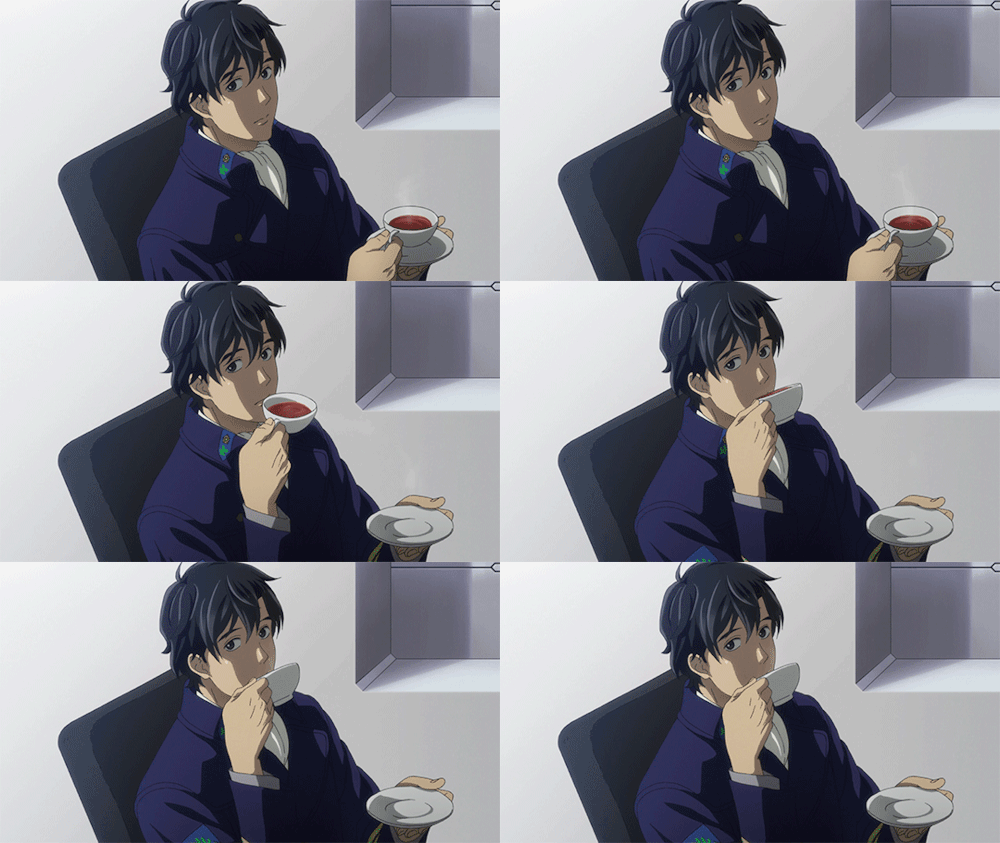
Resultado de imagem para legend of the galactic heroes tea
(Could not make a logh review without showing Yang drinking tea, this is the absolute representation of the show)


As a contrasting figure (not as good though) we have Reinhard. Looking at his worries with efficiency and results gives great insight into the character. Unlike Yang, those are the major things he cares about, his conflict with the nobles does not come from a moral rejection from the awful things they enact, since he is willing to go to the same lengths, but from how they lack the capacity to rule, a complete inefficiency in doing so. Instead of worrying with methods the results are absolute here. His justification to strive for power, to think as righteous in ruling over others, is a believed conceit of being actually superior, he has the best talent and knowledge, can bring results no one else can. Reinhard is entitled to issue orders, to become a supreme ruler of the galaxy, because of being in effect the best man. Yes, he is this kind of conceited, egotistical brat. Where to someone else with more abilities to appear, he would be right to challenge and attempt to rule as well. His ideology is born from an idea of putting the capacity to decide, and actually solving the issues as main goals, the justification of a government. Despite bizarrely never taking such ideas to its logical conclusion, since those are encapsulated by his subordinate, Oberstein. There are hints of romanticism, a valorization of a fair fight and some general ethical ideals (as hypocritical as they come), which never allows him to do so. The relation with his father also adds a lot , a man that achieved nothing in life, and lived in terms of lineage and memories of dead ancestors, exactely the ideals Reinhard found disguting, and stood the entire live trying to denie. Both the in history parallel with the Rudolf dictatorship and the historical parallel with the Nazi regime are also pertinent here. In either, you can see the same worries with efficiency, the debates and democratic system, the individual liberties were silenced, to allow for greater decidability. In the name of efficiency and nebulous goals, any form of control of a government acts were dropped, which gave birth to a catastrophe that killed millions. They give a certain air of terror to young Reinhard’s ascension, since the audience is never sure he will not fall to the same pitfalls, become a similar monster in another display of history ever repeating cycle.


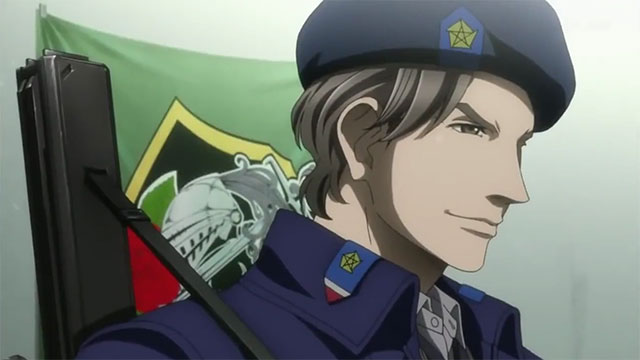
Resultado de imagem para legend of the galactic heroes 2018
(I have finally became a truly sophisticated individual after wathcing this)


To be fair, the focus on powerful people also makes for what I believe is LOGH greatest flaw. In displaying a fascination with history, it becomes very clear what kind of history is attempted to be portrayed here, the one focused on individuals, great names and figures, that eclipse everything else and mold its run. This universe seems to be inhabited, by barely anyone else but those in power. How many foot soldiers, the unknowns, with names forgotten by time, that actually fight and act in wars did we follow on this narrative? Very little and their appearances barely have an impact, or much relevance only being tools to represent the horrors of war (cutting 90% of Poplan and his group scenes and relevance is like the dumbest creative decision they could take). With the only moment you could argue otherwise is the Schenkopp sequence on Iserlohn (isn`t he also a really high level commander though?). This leads to a weirdly impersonal way of combat, where the things that matter are the commander plans (those little graphics of fleets are more relevant than any foot soldier), rather than the reality of the people amidst the battle. This is really far from the ideal, not allowing to get a full grasp of what is happening, the full magnitude of the massacres displayed before our eyes. The maximum you can get of that, is brief glimpse of unknowns getting tricked and killed in a flash, so hooray for giving a dawn.


Though it could be argued, it makes up for everything I said above, with the sheer scope of what is being attempted. The scale of the developing narrative is something very rarely reproduced in fiction, most important plot beats give this sense of grandness something really epic happening. Most twists and turns matter a lot, seem to change and mold the mere fabric of this universe, its long standing history. The takeover of the greatest fortress and the largest invasion force ever seen, being great examples of that, giving the sense we can merely grasp the magnitude of what is occurring. Despite this season still presenting a really straightforward, and simple republican x empire conflict. Most of the major players, which will make for a way more multifaceted, complex struggle were merely introduced like Oberstein, Trunhilt, Reuenthal, the nobles, Rubinky. Which is when LOGH actually comes to shine, with lots of interesting well developed character, each moving their own political and personal agendas, making for a way more engaging and developed conflict. Nevertheless, the seeds of it all can be traced here, and this quality of the narrative can be perceived really early on (not that the animation does much to capitalize on this, but whatever).


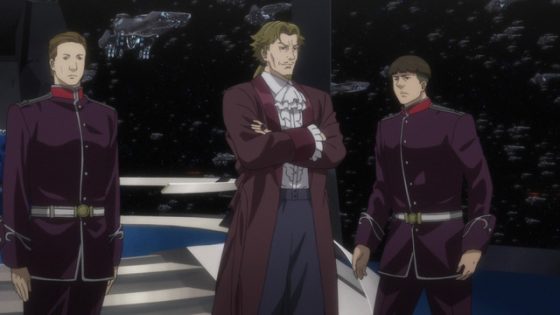
Resultado de imagem para legend of the galactic heroes 2018
(Kind of love how he seems ready to open someone's head with an axe at a moments notice in this picture)


There is also a long standing issue I have with the way it presents some antagonistic characters (calling for villains in this narrative I kind of hard). The show has kind of an attitude of trying really hard with those, to the point they are fleshed out, bring meaningful and well developed ideological and personal conflicts, or not all with some that have absolutely nothing going for them. The series is infamous for the stupidity of some of its cast and for good reasons. The sheer idiocy they manage to achieve is kind of hard to describe. An apt comparison would be to say they are a lot like the antagonist in the famous anime series Akame Ga Kill, shallow, idiotic mass murders. You can see the type whenever there is an admiral which usually hits his subordinates a lot, or is really eager to meaningless die by sacrificing his entire fleet for a warrior’s pride or bullshit like that. They have this really exaggerated and hard to take serious personality, and make the dumbest decisions possible in the face of battle. Having these over the top personalities would be not of an issue in of itself, the problem is they really lack variety in their madness, usually displaying a really boring monotone mindset and actions. Like the most different of those is the proclaimed rival of Yang, and only because of hiding his own stupidity in a lot of empty rhetoric. And they also never create, are the source for interesting conflict, or really add anything of value to the overall narrative. They represent worthless obstacles, which our protagonists surpass with ease, and to show how fucking awesome they are supposed to be. It’s like having everybody to say this is not enough already, we have to nerf everybody else for them to look even better.


On a better note, the pacing which was the long standing fear of the franchise fans was not much of an issue here. It is a bit more rushed than the older version, but tells mostly the same events just fine. That is until the last episode, which finds to be a good idea to rush as fuck some key narrative elements. What is supposed to be happening is not really easy to understand, much less to engage and feel the impact of certain events. I swear, I would not be bringing this up as a flaw, if it was for the sake of amounting to a satisfying end note for some narrative threads. Which is completely not the case, the story stops in the middle of the conflict, leaving us in one of the more insulting cliffhangers endings (or as I like to call them, fuck you finales) I have ever seen. So well done guys, you almost made it, but fucked in the last possible moment.


Being frank, I was also really not a fan of the character designs, pretty noticeably the ones that changed drastically from the old OVA. They took one of the titles with more varied and iconic character designs in the medium (like frankly there no two individuals with the same hair, from the hundreds in the Ova’s cast) and turned the main ones into generic bishounens. A weird case where you can find the importance of the character being inversely proportional to how generic they are designed.
Resultado de imagem para legend of the galactic heroes 2018
(Someone should be shot, for what they did with fucking Reuenthal's character)


A way larger problem comes with the way the empire is represented in this series. A huge part of the appeal of the older series, was how the conflict was rather ambiguous, with no clear good and bad guys (in some instances). This quality is lost when you have such a great focus on the alliance side though. It is kind of hard to argue the imperial side is not being represented as a villain in this particular narrative. The aesthetical way they presented pretty much says so, they enact morally reprehensible acts, which barely anyone in the free planets alliance does. And not much happens on their side of thigs, sure Reinhard and Kircheis get some development and are represented in a more sympathetic light, but this makes them closer to understandable complex villains than anything else. Not sure how to fix this though, most of the important events in this part of the novel and 1988 OVA are happening in the alliance’s side, to the point if they stopped at this point, they would have the same issue. So here is just a wish that they fix this on later seasons, movies, getting to the point where the galactic empire is more meaningfully fleshed and becomes way more than the adversary, because so far that is not really the case.


Resultado de imagem para legend of the galactic heroes 2018
(This really is some akame ga kill level of conflict and resolution, I am not kidding)


An utmost understated quality LOGH always had is how it always have known how to bring out the fun. In such a serious looking narrative, encompassing a war epic with lots of mature themes, this may come as a surprise to some (there are no characters staring blankly for hours while no dialogue happens, making for a boring pseudo contemplative tone here). This narrative contains elements of pulpy ridiculous violence, when we have soldiers actually fighting hand to hand with hammers, axes and the sorts, and this being the decisive factor in space warfare (can you think of something more ridiculously awesome than that?). There are also the really cheesy melodramatic speeches, and character deaths culminating on those over the top displays of their lives and paths, the really hammy exaggerated villains (okay those were always lame). These are funny additions to the narrative and help to showcase how you are actually allowed to have fun, and portray some ridiculous shit in such a serious narrative. Which comes off as a shame, because those were mostly absent in the remakes narrative so far.


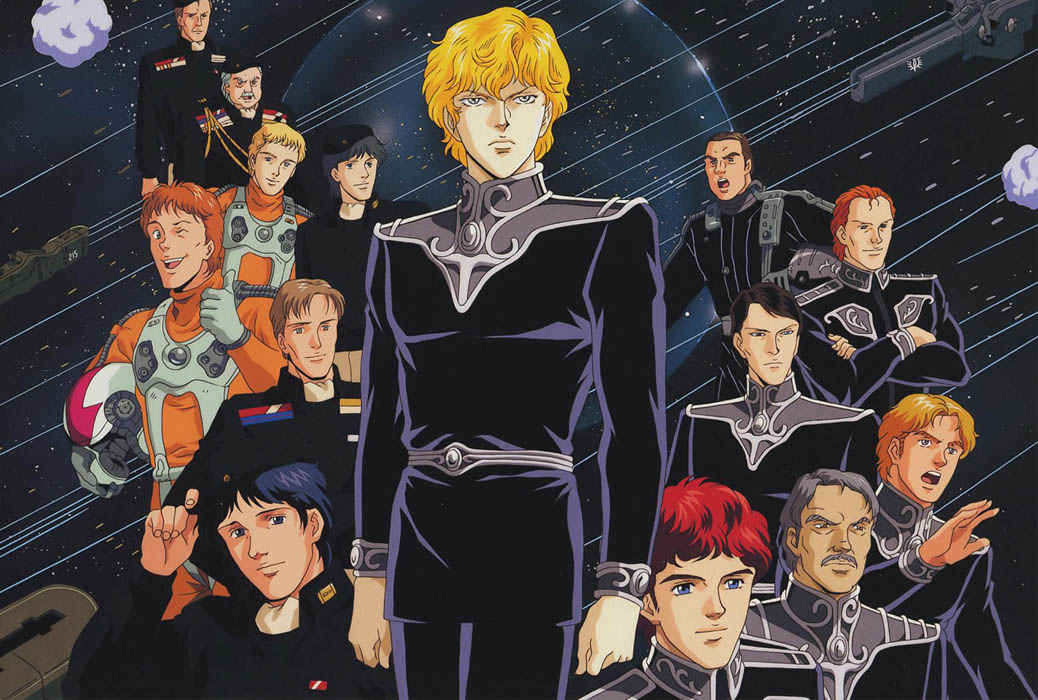
Resultado de imagem para legend of the galactic heroes
(Please give me more of these guys, goddawnit)


So does this new anime deserve a ludicrous title of savior of anime, because of its amazing quality? Hell no. Is it a worthy successor to the original 1988 OVA? Not quite. However, it is a thematically interesting experiment, with (emphasis on some) great characters, and elements that are hard to find elsewhere. I am definitely interested to see how they can further develop this in movies, and in what our galactic heroes will do next. If you have an interest in history though, just do yourself a favor and watch it, the fascination this series has with this topic is impalpable, and can be seen though several parallels, references and just the general story.


Resultado de imagem para legend of the galactic heroes

(A show you should be watching instead of the one I am reviewing)

quinta-feira, 6 de setembro de 2018

Love in Umino Chika's works


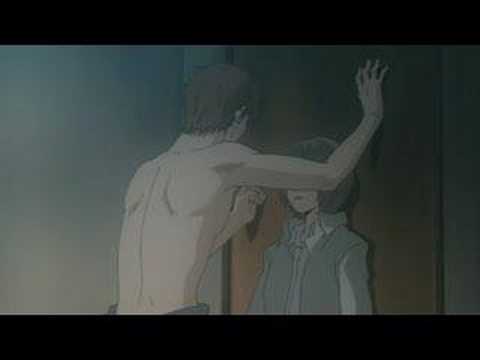
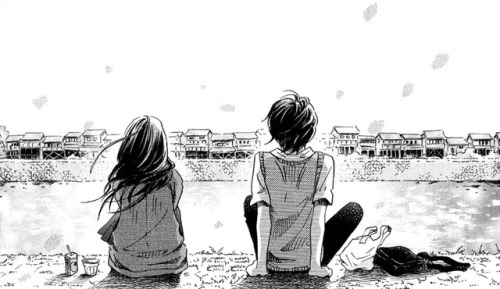
Okay let me take a crack at love, a universal topic. Seen in lyrics, poems, the bible, even on the plans of a presidential candidate to save a country (Cabo Daciolo), this thing is unescapable. A fire that burns without being seen, a wise man’s doom and a fool’s hope and salvation. Something that is too ideal for an idealist to understand, and too real for a realist to see. Everybody has something to say about this question, and this analysis will be about Umino’s Chika take on the topic, me extrapolating conclusions, from the several ways such a broad ideal is portrayed through her manga, 3-gatsu no lion and Honey and Clove (Spica does not matter, really, in her body of work, and her spin offs were never translated so fuck me, I have not read those), and to asseverate the several meanings it takes.


Umino, Chika
(the way Umino's draws herself in her manga)


Starting with the easy part by introducing, what this analysis will not be about. Sadly, the feeling has absolutely nothing of Eros (will be using a lot the Greek denominations for love, so it is good to be at least familiar with its meanings) sexual desire and eroticism are pretty much a foreign object to any discussion regarding passion in these manga. Maybe one of the more defining aspects about Umino’s writing, is the complete lack of sexual intercourse (nobody fucks). We follow throughout her narratives, protagonists that are usually on the 18-24-year-old range, however they act as the timidest teenagers when dealing with sex, that seems to be the last thing in their minds. In spite of this, the expressions of this act, as rare as they may be, are also very telling. On honey and Clove, it occurs on a pivotal point in the development of the relation between Rika and Mayama (which for the extreme acts being portrayed is probably the best way to drive the importance of such interactions anyway), when both spend their first night together. Rika, a woman that lost her husband in an accident inflicted by her, losing the only person that truly mattered in the world, turns for Mayama, the young men that platonically loves her, and decides to hurt him. Exploiting the awareness of his feelings, agrees to sleep with him, just to disappears before dawn, wanting to leave him abandoned, broken, feeling the coldest rejection, another could possibly take. Such an act is far from senseless, it is done in order to strength a sentiment of sorrow, a general self-deprecation and hatred, a sense of melancholia and regret with the act of being alive itself. Those bringing a determination to abandon existence, finally exiting this world, that could have nothing more to offer her, whenever her husband work come to a completion (ensuring a suicide was actually her goal here). Confirming such, by destroying the only person that refused to abandon, despite the painful, melancholic existence. Note the lack of any romance in the enactment of this. There is also the implied sexual abuse between Rei and Kyouko, which is basically a power play, a demonstration of predominance, having a revenge regarding the way her father chooses Rei, instead of his actual children. That consists only of a way of instilling hatred, and to showcase how dysfunctional they are as a family unit.


Resultado de imagem para takemoto and hagu honey and clove
(Answering like this to someone trying to hurt you deeply is just so awesome)


Finding a better picture of this topics, consists of studying one of the more interesting love “triangles” in fiction, the pair Morita, Takemoto and Hagu. Morita’s style of passion is very close to his own self-satisfaction, being based around egotistical needs, where feeling well is the most important factor, which is in one of the more criticized sentiments found in the manga. Therefore, Morita our protagonist has to follows such ideas to a tea, being a narcissistic man children (he is pretty similar to someone I know, actually), always acting according to his whims, while barely acknowledging the desire and situations of those around him. Nevertheless, having an arc that mostly revolves around these flaws, and concepts. Throughout the series, he learns and finds himself with great affection for Hagu, while she also corresponds, with a platonic infatuation. The sentiment is really particular in this case, though, in the sense it is completely twisted to self-gain. It is love that is as far away as possible, to be the most important aspect, one that happens to be a play thing, a ruse to use and discard whenever you find it necessary. A sentiment so devoid of any attention and care for others, where you can ask someone to abandon everything, to follow your desire for self-destruction, then ruin their life, and the act of accepting such a ludicrous purpose becomes an obligation. Having this abstract idea, to work as self-justification and indulgence, in a process to instrumentalize and completely dehumanize people. A relationship based on such feelings could never work, and rightfully so it doesn’t, as both come to separate ways in the end of the series, finding their mutual affection never met.


Resultado de imagem para honey and clove
(Just love seeing these kids, in their pointless paths to adulthood)


In stark contrast with what I laid out above, we see Takemoto. Onto the character, you can find a very direct representation of philia, found in kindness and mutual appreciation, where going for the happiness of the beloved is essential. A sentiment found in the backward ways, the character goes in order to fulfill Hagu’s wishes, always worrying how she is feeling, what could he do for her, in order for both achieve joy, filled with empathy, so to speak. There is this sense of wonderment in his journey, of getting to know, seeing more aspects, facets, flaws, anxiety, just in general drawing in closer and getting to know the beloved, becomes a pleasure and a goal in of itself. There is no attempt to extinguish selfish interests on this form of love, Takemoto because of his low self-stem, has an almost pathological desire for altruism, he can only stop feeling worthless, and a generalized self-deprecation, when doing something for others, which he does, at any cost even. There is also a desire to run away from loneness and emptiness in the heart of the character (cause by a complete lack of direction, and capacity to make any choice for the future), that is usually channeled towards this relationship. Perhaps you could draw those feelings back to deeply rooted anxiety and worries, him searching the world and others, to run away from the more internalized painful truths in his mind. However, there is just so much merit, on the tale of this scary anxious kid, lost and with no sense of purpose for his existence, but still struggling to create connections, doing the best for others, so kind that the concept of hurting anyone is physically painful for him, and following peoples wills, as almost a mandate. I certainly found it adorable.


Resultado de imagem para mayama rika honey and clove
(The never ending desire to put my fingers around his neck)


This is the point where I add, there is actually a forth wheel, on this supposed love triangle from Honey and Clove. In the finale, the will them won’s them ends, with her abandoning the romantic interests, and going on a self-recovering journey, with her 30-year-old cousin, a controversial ending for many. When reading an Umino Chika manga, it is good to have an open mind, since the difference between romantic love, and familiar one, is always very fluid. Familiar love has nothing of Storge, meaning it does not come from a sense of natural obligation, there being lots of examples of such relations being completely deprived of the sentiment, in 3-gatsu no lion. Furthermore, Hagu and Shuuji’s relation, could only be described as one of complete devotion, there are literally no limits to where this man can go for Hagu, the manga ends with him literally quitting his job, giving up any savings, and going on a massive years long process, just to help her injured hands. Notice how this does not depend or is drawn from any qualities on the loved object, but on its intrinsic nature, she could treat Shuuji like shit and he would still love her. It is unconditional love, through and throughout, based on a sort of morbid obsession. Being together all throughout their lives, made them closer, knowing everything there could be about each other, allowing them to share a relationship, which could never be contested by Morita with his self-centeredness, or Takemoto with his personal insecurities. Those 3 types of affection are for me a template, every kind of love found in a Umino Chika work, more or less fits one of those.


There is a very telling discussion on 3-gatsu, on which the author displays what I believe to be some of her main ideas on the topic. On it, Akari is questioned about Rei’s growing feelings for Hina, and the chance of those blossoming into romance, with her literal response being of this as an impossibility. Each of them already shared a deeper bond, a filial love, which was way stronger, satisfactory and everlasting than any form of platonic romance or passion. To regress from this status on their relationship, would in fact be a downgrade. Something that makes a lot of sense in the context of 3-gatsu no lion, a story about our protagonist surpassing and learning to deal better with depression, trauma and personal anxiety, by finally forming the core family, he could only dream through most of his life.


So with that out of the way, I can finally get into what I consider my favorite couple in fiction (Shevek x Takver is up there though). The actual relation between Rei and Hina, is something I can only describe as a magical, unbelievable entity. They just complement each other so perfectly, their interactions always allowing and furthering growth, providing something the other deeply needs. On Rei’s side, we have this emotionally traumatized and repressed kid, always keeping a façade for others, finally acquiring better emotional intelligence, realizing that dealing with your emotions, trying to talk to people make them understand, face such issues head on, is always better than killing yourself internally by suppressing and wallowing toxic ideas in your mind. On what consist of the most poignant scene of the start of the show, where Rei is forced to confront her openness about the feelings of loss Hina has, as a result of the losing her mother, something he knows all too well. It also highlights another troubling aspect of personality, the tendency to internalize everything, create value based on how people perceive you (or better to say your own distorted vision of such perception). A process of self-evaluation only based on others opinions, where every criticism becomes something to be taken at face value, loneness and isolation are just natural, because if people perceive you as someone to be isolated, then you certainly deserved it. These ideals begin to break for Rei, when he sees Hina going through some of the same hardships. When receiving bullying by the rest her class, she refuses to internalizes any of the mean things they did or said her. Being ignored by people did not make her a horrible person, that deserved to be left alone. All she did was to stand for a friend, who was in pain and desperately needed help, company, a friend, and nothing the world said or did, could shake her certainty of being right. That the act of helping, being kind was pointless or wrong, despite how scared one may be, of some of its consequences. The mere idea of someone can actually taking such a stance, ensure their own merit, and worth in spite of a group’s perception and judgement, is just revolutionary for Rei, whom was never about to develop such conscious, because of a painful awareness of flaws, issues, and mistakes, that formed a monstrously distorted vision of self. Kyouko coming to his side and actually saying the most malicious hateful things, is a fact Rei actually takes some morbid pleasure in hearing, and assuring how much of a horrible person he actually is. Hina takes this, and shows there is a new way to deal with all of that, removing a truly dangerous certainty, once held.


Resultado de imagem para 3-gatsu no lion rei and hina
(Like even more seeing these two though)


The act also takes an entire new meaning when seen through these specific circumstances. Rei was also someone that faced social ostracism, through his life never managing to create bonds with anyone in school, his only answer to the abuse he received from others, was to try to disappear, and never be noticed by them. In Hina, he finds something needed throughout all of life, someone which would stand for the socially isolated kid, that would not leave its side even when facing pressure from a class. Furthermore, she even affirmed the kid was not wrong for not fitting in, but the toxic group dynamic was the subject to blame. Rei feels Hina is there, refusing to abandon, always there by his side, an impossible beautiful and important symbol of goodness and kindness, that gives purpose for the hellish years of lonely school live. Sharing such poignant moments and ideals, gives Rei’s life, create a purpose for it and a new goal, in helping the loved one, while also allowing for a renewed desire and capacity for self-improvement.


Resultado de imagem para bridge 3-gatsu no lion


Oddly enough, the complementary aspects of the relation do go both ways. Hina does gain greatly in terms of security, by having this relentless, always stable and trustworthy individual by her side. Someone that, although almost incapable of expressing himself in words, is always trying meddling, making plans and taking whenever action necessary. Being there, when the whole word starts falling down, because of her abusive father coming back. In teaching that there was no reason to get frozen by a few happy memories of the past, and reminding her what is the ideal of love, and relationship they strive for and hope to maintain. One that can be found in what the people of this house, the Kawamoto’s and Rei share, not on the cold indifference of this stranger. That can be found on people that wish for the best of the family, and would do anything to assure each other happiness, no questions asked.


Resultado de imagem para bridge 3-gatsu no lion


You know, if you had payed close attention there is a strong parallel between the absolute fraternal love some character present, and the criticized egotistical love of Morita. You could see one as an even more extreme reversion, or its opposite. The questionable aspects of such unconditional fixation, despite a few positive examples are not above criticism. In this side of the field of parental love, we find the most hateful character Umino ever written (really everyone else is just so adorable) Seijirou, the father of the Kawamoto sisters. Onto his character you can find all the loveable characteristics of a compulsive liar, that says whatever suits him, and manipulate every situation to his binding, a vocal abuser of wife and children, that loves to go on tirades on how they are to blame for everything wrong in life. Someone that can leave a family just for being actually bored and wanting something new. But the sad part of this, is her wife still had that maniac obsession, an unconditional affection for such man, defending him despite many horrible actions. Wasting her life, for the return of the kind man she once knew, and fall in love with. This sickening and self-destructive aspect of devotion, is the authors criticism to those displays of love. As consequence of such events, there is a strange of melancholy, of a fundamentally broken household under the cheerfulness of the Kawamotos, the older sister being so emotional traumatized she becomes horrified of the act of following in love. Passion became such a monstrous thing, that can only lead someone to support abuse, ending up as an emotional wreck, completely ruining any happy memories connected to this aspect of life. And really, who can blame her, when the single experience Akari had with such, ended up in such a way, hurting the mother she loved the most?


Resultado de imagem para 3-gatsu no lion akari


There is this tendency if fiction to give a greater attention to declarations of love, starts of relationships, than the relations themselves, which is definitely followed here. Most main characters’ deal with this fear at some point, a general dread of exposing yourself, finally showing your innermost and more personal feelings, let the beloved one see what is there. Your pathetic self, which you believe has nothing to offer at its most fragile moment. Takemoto prefers to cross the entirety Japan with his bicycle, to run to the ends of the land, because facing such sentiments, Hagu, and his pointless search for purpose, was actually way more terrifying. Morita is only drawn to a point he can come close to indirectly confess any of that, in a situation where he has lost everything, and can only think of the worst thing to hurt both. Therefore, such moments are in fact periods of immense growth and change, where you can find the catharsis for the characters’ personal journeys, Rei’s declaration of marriage for Hina, or Mayama crying over how scared he is, because of how personal were the worlds out of his mouths. These paths of affection are deeply tied to personal growth and maturity, throughout both narratives, and with the even grander aspect of seeking purpose in life.


Because meaning is an integral part of an individual life’s, and the search for one in a never fulfilled loved, is a central question for some characters. Yamada and Takemoto, never met their objects of desire, the romantic relationship they desired, being born, growing, dyeing and only ever existing in their own minds. Far from denying any merit of such relations, those are reaffirmed as valuable, in going after their wishes, each learned so much, created relations, met new people and formed memories, which cannot be easily forgotten. Despite how aimless the whole thing may seem, and the entire road may as well have led to nowhere, there is this sense of wonderment in embarking on it, meeting all these new places and growing a lot in the process. Looking back Takemoto fells nothing but gratitude, for coming to know such a people, for falling in love, and having all this time with her. To say it is about the journey not the destination is an understatement, and surely these characters found their ever elusive purpose in such endeavors.


Seeing the narratives of Umino Chika as stories about people dealing with stagnation in life, a general inability to move forward and deal with their past, would be quite accurate. Most romantic relations have this static feature, we never actually get to see a personal changing their love inclination (with Rika and Yamada the change is closer to a subtle possibility than anything else). Furthermore, the will them, won’t them scenarios Honey and Clove create go nowhere. Which in a work of the predominance of the past over the present, that is trying to give this strong sickening sense of nostalgia and decay, focusing on the importance of memories, and a day to day life that seems to never change is essential. Life is perceiving as moronic, never changing for these characters, the entire iconography revolves about its cyclical nature, this can be seen on the oppressive Ferris wheels, the gentle four leaf lover, the attention to circles in a bicycle. However, love has such a transformative nature, it is what leads Rei out of his isolationist instance, to try and create more meaningful interactions with people. Having someone she genuinely cared, and worked towards motivates Kyouko in her little redemption arc. Far from something in service of decay, it stands as an object of change that leads to a general self-betterment , creating some of the better emotions and interactions, on the paths of the humans that dare to attempt it.


Perhaps the most interesting aspect is the character’s inability to explain anything though. They seem too clueless to completely understand any such feelings. Ask any of them, when they fall in love, what it about the person you appreciate so much, why would you go that far from her. They simply have no answer, no rational meaning or interpretation, or form to truly get any of it. As something they cannot rationally understand, they also act pretty irrationally about, always worrying, wasting time, energy, refusing to let go when being terminally rejected. But maybe those messy confusing parts are what such relations worth it, and believable in the end


As bright and idealistically as this discourse may be, setting up a bound is important. Getting to the realization love isn’t everything, nor it is supposed to be. When it appears as only a settle back, something stopping you of doing what you really need and wants to, then of course it needs to be discarded. Shimada and Hagu went through this route, having to leave people they cared deeply about. In shimada’s case it was a matter of personal ambition, finding love was not the most important to him, the frustrating and endless shogi life, he dreamed of, was, so he had to meet such a path with the determination to leave everything. For Hagu what mattered the most was achieving an actual dream, a simple vision of ultimate almost divine artistic expression. Her existence was only a mean to get to that, and she was ready to put everything away, in order to reach those desires. Both willfully made a choice, found a different way and goal in life, and found variable degrees of satisfaction in doing such. Despite the incoherent mess, I hope you have taken something out of what I wrote. You can find countless people talking about love, people describing it, giving their little worthless opinions on the subject. The number of those with something relevant to say, is way smaller though. But when an artist finally appears, and can portray a love that talks not only of the universal feeling, but seems to show the specific brand of passion you believe, that seems almost specifically made, you can find no equal anywhere, containing a particular feeling or representation felt or believes to still do. Then, that is something to take notice of. To elicit such special emotion and intensity in a melodrama (because let’s face it, this is what all her stories actually are), giving such warm fuzzy feels, to the point you feel the passion, the characters are displaying, even when the people involved cannot even put those in words. If you could not get by now, I do love her, and those works of fiction too.


Resultado de imagem para 3-gatsu no lion rei happiness

(Please do try to give her works a chance, it would make sad young men really happy)

segunda-feira, 3 de setembro de 2018

Amazing manga endings: Billy bat

You know, I have a pretty long gripe with the way people talk of acclaimed author Naoki Urasawa. His manga stand, finding no equal in the medium in terms of thematic and character depth, but there is this everlasting notion of him writing only bad endings, that pisses me off, to no end. The intent of this text is to present the development of ideas and narrative on the work, Billy Bat, and to showcase how that culminates, in my favorite finale in all of media.

The first thing that should be made clear when discussing this manga, is to clarify the narrative sequence, that is being used. We are talking about a work that occurs , from the beginnings of humankind existence(or at least of us as a self conscious entity), going as far as reimagining of mankind dystopic future and extinction (sort of), which follows dozens of different characters in several historical periods, being complicate to even properly point who is our main character supposed to be. Sure, I could be lazy and structure the story about a certain concept, as it could be argued, this is Billy Bat’s narrative, everything  can be traced to this concept in a way, his identity and nature sometimes taking central focus as an ongoing mystery. In order to counter this conceit, I will go about this in a roundabout way, but I hope to have explained why this is not the case by the end.

Perhaps the aspect that impress me the most In Billy Bat, is that no matter the time being presented, the Jesus Crist era, the warring states in the 19th century in Japan, the 60’s and 80’s in the United States. All of them have in common, something, a great focus on symbols, universal ideals, that move and motivate most of the characters being presented. Be it the search for God, in the ancient Israel, wishes of conquering the world and fighting with honor in the 19th century Japan, the conflicts between capitalism and communism and the search for truth in the post world war 2 Japan. The extreme variety of cultural encompassing movements take central stage inside characters struggles, showing how they motivate and control individuals. How said ideals evolve and change with time is also really important here, sometimes this is shown more directly when we see the same characters or older generations of the same family, how they change in completely different time periods, Kevin Goodman's experience with racism is completely unlike that of his parents, or how the Momochi clan, worries and attitude changes completely in a different time and culture. And sometimes more indirectly by simply contrasting several periods being presented, the two wars of the manga that will be talked about in depth below, being great examples. This is the single biggest purpose of the style of narrative being played here, with gigantic stretches of time portrayed and timeskips, that allows for the manga to have a great variety of historical periods being presented, all of them being the backbone, of its thematic exploration.

Resultado de imagem para billy bat kevin
(Fiction Judas was not so great thought)

While also being a brilliant premise for tapping into one of Urasawa greatest strengths as a writer, his ability at making period pieces, using moments in history as not only as a backdrop for his histories , but integrating the biggest anxiety, conflicts and problems of the period, and blending those perfectly onto the history and characters he writes. Said strong aspect takes a bigger purpose here, where their own inclusion adds layers to the overall theme, of exploring the evolution of ideas in mankind’s history, the show is using. Managing to show those grandiose metanaratives, these lofty ideals that try to explain the society in simple terms and dichotomies, and showcase them in intimate personal emotionally charged ways, through poignantly character action. No matter how heady with its themes his works may get, he never forgets to have a human emotional core underneath the whole thing, blending effortlessly the emotional catharsis and intellectual exercises aspects, in his body of work. Nothing says this better than Kurusu arc, his ultimate conclusion of denying nihilism and destructive tendencies in his last moments.

Resultado de imagem para billy bat kurusu
(This manga take on Johan)

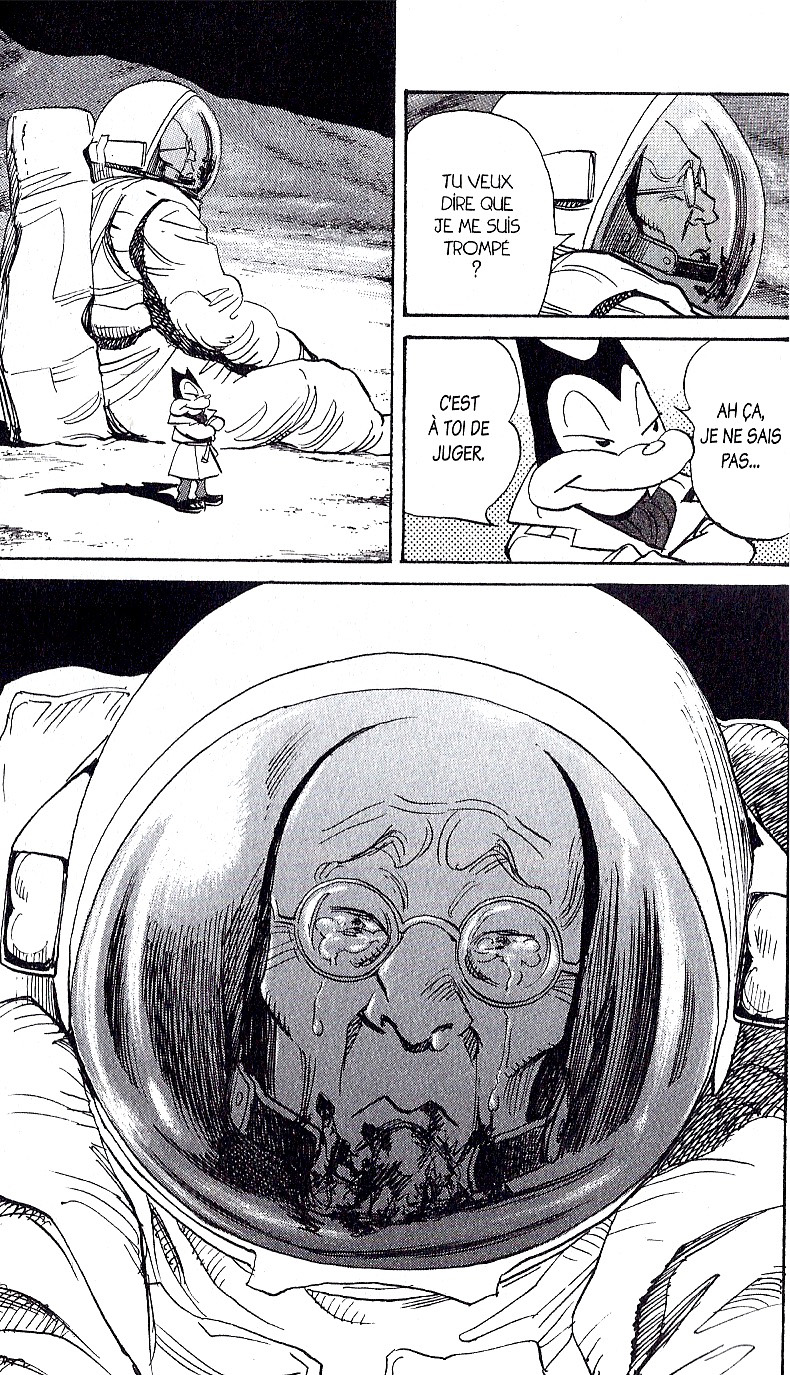
So, where is the title character Billy Bat in all of what I just said? Well if you compile of the greater ideals at play in the manga, 3 are pretty much ever recurring aspects in most stories and time periods being told, the conflict between truth and lies, a struggle for authenticity, to discover the real and the fake, usually portrayed through the struggles of the Billy Bat cartoonists, most notably the Chuck Culkin, Kevin Yamanga duo, whose arcs revolve mostly around that. And of course the dream of the travel to the moon, humanity's impossible goal, a distant vision and crazy dream throughout the ages, everyone during the 40s, 60s did not stop thinking about it, even its aftermath has great affect during the 80s. And of course Billy bat itself, the great number of symbols it takes throughout the ages, how it manifests shaping man in the most important decisions of humankind history. How it appears in different forms, mediums and cultures, sometimes incarnating even diametrically different concepts. Those can be seen in most main characters motivations, and usually are somewhat intertwined, finding out the truth usually takes form of wanting to understand Billy, even the journey to the moon takes form of finding his true origin, and identity.

Resultado de imagem para billy bat kevin
(My favorite portrayal of Hitler in fiction)

When we reach the 21st century, the layout of main threads I explained above starts to get really messy. The turn of century is, even though nothing happened in it, the biggest turning point in history. Let's set thiswith an easy example, on how the search for truth is treated differently in two periods. The society of America during the 80s had as its most defining aspect a proliferation of paranoia and conspiracy theories, people were terrified the government and the media were lying to them and actually demanded to know the truth, regarding facts like Kennedy assassination, or the landing on the moon(not coincidentally exactly the facts that were portrayed during the 60s in the manga). The most meaningful event that shows the change, is having the recording which proved, that the landing on the moon showed to the world by the USA was fake, one of its biggest secrets is now out there on the streets, and appears in a cinematography lesson in the 00s. And guess what happens? No one gives a fuck. The recording that could prove the biggest journey for mankind was "false" is there and nobody gives a shit, not even to compare it to the official footage and find about the fake landing. We find both of the most important threads in the story completely undermined, losing any value in a matter of a few pages in this century.  There are dozens of example of this happening, "fake" versions of the Billy Bat comic are a widespread thing now, people were getting murdered by the hundreds by doing that through the 60s and 80s, now no one cares about the authenticity of what they are reading. Getting to the moon is considered a waste of money that ruined the soviets. 


This change is not limited to those, all other kind of ideals lose their meaning here. And it reflects the changes in power dynamics in this period. Take nationalism, the idea of the nation state as this enormous entity that served and enacted the interests of society. The nations were the grand center of power in the 60s, being the president of the USA( Kennedy) was the big position that could change history. Most other conflicts are instrumentalized by nations (capitalism x communism) the actions of the larger companies like Golden Cola and Billy Bat were usually tied to national interests, they served as propaganda and means to spread the national ideals of America. This submission being pretty much spelled out, by the way man of the Chuck Culkin enterprise, explicitely say to not defy government orders or requests. A good line in the 80s foreshadows the transition about to happen, the soviet union was handling to private sources the creation of equipment for their space exploration project. At the 21st century we really see the difference though, a new organization form rises, the multinational company. The Chuck Culkin enterprises arise from their humble beginning as an entertainment industry, to a gigantic company, which has control of several strategic sectors all throughout the world. Water, oil energy, theme parks, comics, just name the object, these guys have a big share in that market. This under precedent level of power makes them able to command the government of China to a massacre, no reasons asked. 


The birth of this new structure is not so much a complete change in the world of Billy Bat by itself, this manga has dealt with bigger changes with the way societies are run through the story, but a very specific difference of the new structure in place, is. There is a dialogue that showcases perfectly that change, when Timmy Sanada owner and biggest investor on Chuck Culkin enterprises is asked, what does his company stands for, what are the moral values it represents, to which he stands silent. The new symbol of power is empty, there is no greater system of beliefs it represents, nor does it presents any clear vision or future for society. Its lack of vision or morals is ultimately why it never works as the previous metanarratives as a binding force for society. It never manages to get people to internalize its value systems, make them belief this structure stands for freedom, or justice, something that would make them follow it, to motivate them, to give it something to fight for, even against their own self interest. It holds power over people only by offering cheap escapism to them(the theme parks being the personification of that), and providing means for their consumerist behavior.

Where I am going with this should be clear by now. This manga is at its final stages telling a pretty strong argument about post modernism, the school of thinking that abdicates the end of the grandiose metanarratives in modern times. Those bigger conflicts and ideals that would explain all of society in simple terms are no more, reality is just too complex and multifaceted to allow for that, there are just hundreds and hundreds of movements, ideals and clashes between gropes, all struggling for a hegemony. It comes to a point were the individual itself does not fit any metanaratives, he individually has to create the meaning and purpose, that will dictate his actions. This marks a change on Billy Bat himself, it is why he becomes unable of talking to people and influencing history(which not coincidentally coincides with the changes in century), there simply is no space for one man that can alter everything, no single event that can be avoided saving mankind The conflicts being faced now, environmental issues, social inequalities, lots of small racial and religious problems, lack of resources, there is nothing that can be done about those, just by appearing for a few people as Billy Bat always did. The manga have always had a focus on showing the historical development of societies, especially during the 20th century, but there is a different history at play here. One not written by a handful of people, whose names go to history book, but one having billions of people, all easily forgotten, but whose actions will decide the future. Billy Bat even this concept, the biggest story in the existence of mankind, which inspired, motivated and led to humanity’s current development stage is now irrelevant. It is now completely incapable of influencing events, both to doom mankind, or to ensure its survival.

Overall I got to say, this is a pretty grim scenario for humanity's future. It ends the search for purpose, truth and answers of your characters exactly with the non-existence of such. But the way said scenario is being portrayed makes all the difference here, even though individual attempts at saving the world, correcting the issues of humanity are deemed as impossible, the work is in no way encouraging people to simply give up, much to the contrary. In this point, I will have to focus on the individual, how the closest we have to a main character, Kevin Goodman is affected by reality. Kevin from birth was marked as a cartoonist, and had the biggest desire to write Billy Bat comics. It was what he kept practicing endlessly in his youth, but there was a problem, he kept getting rejected because of that,  heard everybody calling his work a fake, a copy of the real deal, published by Chuck Culkin enterprises. This left a huge mark on him, even though Kevin assumes as said company main author, he still refuses to consider himself the real deal, and still turns to Kevin Yamagata as the true author of Billy Bat. Steeping ahead a few years and we have a different issue plaguing Kevin.  Of him just being incapable of writing anymore, the glimpses of the future Billy Bat constantly brought to him are gone, no longer are there those visions that helped him lay out stories. Now he can only bring himself to write normal comics, those cannot give him insight into the future, or help him stop catastrophes, the whole thing just takes airs of pointlessness, Kevin sees no reason to keep doing and just starts looking for a cartoonist, that can still talk to Billy to understand what is going on. Ending put in the same helpless state as everybody else, unable to enact what he thinks would make a real difference, the situation of every individual in the end of the series. This situation of relative powerless far from maddening allows him to understand something, the value of everything else. 


When finding Billy Bat, Kevin is able to finally see the purpose in every little action, his own life as culmination of hundreds of little events, pointless to overall history, but that mean everything to him. It is the small meaning of every little action we take, that he finds out, and is in those that is where he find his motivation to keep writing. His continued life is paradoxically the result of two man who only took action because of how inspired they were by seeing stories. His father managed to stand up to an entire city of racists in the south of the USA, because of the act of reading the Billy Bat comics and Finny saved his life, also because of how much he loved that same comic. He sees in those events the inspiring potential of small intimate stories, the fact of people reading a story, finding it to be geared exactly for them, to portray their hopes, feelings and situation better than themselves could describe them. How potent and life changing those can be as an experience. It is this change from the all encompassing narratives, to trying to create meaning and change, with smaller, deeply personal narratives, the purpose of the storyteller. Far from despair, the situation of the individual in this point in history brings relief to the character. Kevin finally comes to terms with his place in the world, and is finally able to enact on his older almost subconscious desire, of simply telling the stories he always wanted, without getting bogged down with needless worries about the universe. In one that I can only describe as one of the most cathartic character moments in fiction.


Resultado de imagem para billy bat chapter 164
(The ending everybody(idiots)kept telling me sucks)


The finale of the series represents a culmination and impressive representation of a lot I said above. Many complained about the last 3 chapters not having the main characters, which was exactly the point, to drive the idea home of the world changing, giving a sense of a narrative, where the actions of everybody not just of the few people we follow, is what really matters. Also it is absurd considering how pretty much every main character has had a complete psychological arc(Duvivier, both Kelvins, Chuck, Timmy), there is no need or point in showing anything else about these guya life's anymore. The war going on the final moments of the manga is an obvious parallel to another big conflict portrayed in the manga, the war for the land of Iga. The difference could not be more striking though, of both events, the war against the Momochi clan was one loaded with ideals, where a man could come to extremes of killing all the closest friends he had in life, and still consider himself justified. What was at stake was so clear in the mind of every warrior, their belief of them actually being justified so strong. In contrast no one has any idea what is going in the war at the end of the manga, every soldier is unsure what they are fighting for, what is this war about and what the heck they are supposed to do. Half the time they cannot even tell apart who are the enemies and allies, what army is each army doing, or what they are supposed to believe. The whole thing is basically a wasteland, which is a obvious reference to the ending of the world scenario(every Urasawa manga needs the end of the world as the stakes), where a kid would stand alone in a land in crumbles. This was the end of history according to Billy. We have two soldiers stepping on landmines that would explode if they moved, and ready to kill each other at any moment and a child in this place. The death of the soldiers would mark the world's end, the kid would end up dying alone in this wasteland just as promised. 


But then something extraordinary happens. Both soldiers see they share Billy Bat symbols on their shirts, and a mutual appreciation of Kevin Goodman comics, which in turn makes them able to identify, see eachother as more than enemies, but as fellow human beings. It also connects them to the child, that even on the verge of death is amazed they have an edition of the final comic, he was never able to read. Both even manage to resolve their issues through this, even finding a common goal in risking their lives in order to save the small children. After they succeed and manage to survive the kid finds himself at awe of something. The history he just witnessed is exactly like the last issue of Billy Bat he reads, everything in it seems to have a purpose, everything on that story seems to be made directly to him, this person, in exactely this situation. This finding wonders him, gives him new goals and motivations on life. This is how the last prophecy of Billy is avoided, through these specifics seemingly pointless messages, that found the public it meant the most to. The world is saved, and in the midst of the dread of the reality there is a sense of hope, humanity will find new meanings, to strive towards and persevere, even in the madness of the modern world.


Imagem relacionada
(destroying youself or the world, aren't both the same?)

If you cannot say by now, Billy Bat is one of my favorite manga. This analysis started from a wish to give better understanding to some of its least appreciated aspects. Billy Bat is a really unique series, in a way the most ambitious work of fiction I have ever seen, attempting to explore in depth a topic as complex and vast as the historical evolution(most notably the ideological) of mankind. It might not have the best plotting(like every Urasawa work)and it does not hold a candle to something like Pluto in terms of character writing(it is hard to find things who do really). But what it achieved as a really is the most fascinating though experiment I have ever seen. In the end,  perhaps what this manga gives me is a sense of hope and purpose to keep writing and explore more glorious aspects of his works in the future.
Resultado de imagem para monster johan

(This attempt at making something like the Mr. Cynical explaining the ending of monster's video is embarassing, you should watch the real deal)

sexta-feira, 31 de agosto de 2018

The best star wars movie


The last Jedi is my favorite movie of the current era Star Wars (the Disney ones). It managed to correct most of the issues I took with its predecessors, like the predictability and the dependency of well-known in the franchise plotlines and characters in the force awakens, or the lack of meaningful character arcs of rogue one, while also adding some ambitious themes and ideas, which were pretty much never seen before in the franchyse. The following essay will detail my impressions of the movie, and as such it will spoil the heck out of it.


Resultado de imagem para the last jedi TJ

(Kind of found relatable, how this guy was almost literally saying fuck Star wars and its ideals)


The biggest idea of this film is how to deal with the past, usually abstracted to dealing with the mistakes committed previously, and the fact we are inevitably going to end up committing them again. Said conflict is perfectly portrayed through our title character the supposed last jedi, Luke Skywalker, a deluded man waiting on death for himself, and the order he represents, incapable of moving on and helping anyone. His apparently uncaring demeanor for others is warranted though, it comes from a bigger conflict regarding merits of his existence and of the jedi order. His questioning comes in the form of establishing a myth parallel, both him and the jedi became mythical infallible existences in the people’s eyes. But what is the worth in the existence of such mythical perfect entities, when in the past both committed and will keep committing mistakes, inevitably failing to the people of the galaxy and to apprentices who fall to the dark side? Luke’s resolve at the end of the movie shows him having a more positive relation with his own failures, by making him not only linger on its horrible aspects and using it as an excuse for not even trying, but instead as means of learning important lessons, passing those to others and even correcting some of the damage caused.


Rey and Kylo Ren are also struggling on how to deal with the such issues in the movie, Rey constantly looks for who are her parents, hoping that her heritage would define her identity as an individual. Kylo Ren’s character is defined by figures of the past, being both Luke’s failure in being his master, and his own failure at becoming Darth Vader. Those failures led him to a completely negative view on heritage, which is showed by his posture and ideology at the end of the movie, trying desperately to forget everything that came before him and erase its existence, him literally quoting "let the past die, kill it if you must". Rey solution to the issue consists not of forgetting or erasing previous events, but accepting it all even the unpleasant truth about her parent’s identity, but still strive to move on, make your actions in the present define who you are, and what will be her part in the grand scheme of things (or at least I think so, the movie was never really clear on Rey’s final stance for some reason).


Resultado de imagem para the last jedi

(My favorite emo nazi)


The questioning of why the jedi as a myth and institution should be maintained despite being really flawed is only answered at the movie’s ending moments. The scene in question shows previously presented slave kids playing with toys one of them being of the legendary jedi Luke Skywalker, while wearing the rebellion symbol. And it is as a symbol, that the movie is saying the mythical elements of the past are really important, the myths regarding the rebellion and the jedi order are shown here to be important as symbols to motivate people, get them to look at the sky and dream of something above their reach, to inspire this new generation to go beyond and try harder, at achieving whatever things they may want. This inspirational aspect of idealized institutions like the jedi, is portrayed as way more important than their real fallible existence. And that is the movie answer to Kylo Ren destructive tendencies, sure simply burning everything and pretending the past no longer exists may be an easier choice, but it also ignores all its potential of positively changing the present, which is pretty ironic since Kylo Ren himself is an example, of a kid inspired by a mythical figure to become who he is now. It is hard not to die this whole discorse, with the nostalgic glorification of past Star Wars found in a new hope. On a way this messier, more nuance view on past, where we stll view its merits, while alsoi admiting its flaws is the movie direct answer to that. On a way Kylo Ren is talking about the legacy of the Franchise, when he claims to let the whole thing die to move further. A view the movie is certainly not advocating for, with its reaffirmation of what the instituitions anc characters represent.


Resultado de imagem para the last jedi luke lightsaber cliff

(Luke throwing the lightsaber, the symbol of the nostalgic bullshit of a new hope, off a cliff, is such a great scene)


On another topic this movie tries to showcase an ideological basis for what the resistance stands for, which is good after 5 movies (yes the rebellion and the resistance are the exact same thing) of them being only the guys which were against the empire (first order), and believed in the force. The ways it does so is not so great really, this idea is implemented through Finn and rose plotlines, which I have to say are not as interesting or really have any real purpose on the movie. Their whole go to the casino, find the codebreaker and disable the tracker plotline really added nothing or had much purpose in the grand scheme of things. They achieved nothing by doing this, nor it helped the rebellion, or had any significance outside the two characters involved (and Phasma), it could had been completed gutted out, and the plot of this movie would be almost the exact same. It does move the character arcs in significant ways though, Finn learns to stop worrying only about himself or Rey, starts caring more about others and finally officially identifies himself with the resistance (even though the movie starts by ignoring his character’s urgency and making him go to help the resistance anyway), his act of even willingly try to die for the rebellion, being a great example of that. But really what said plotline has to showcase of what the rebellion stands for, is really not worth the waste of time, it is in general. It does say that the rebellion represents all the oppressed class of the galaxy, freeing slaves and abused animals supposedly represent that, and their way of fighting, has more to do with love, protecting what they love, than destroying what they hate. In the end it amounts to making them the rebellious group that fights for love and the oppressed, which is still not making much of differentiate and giving them an ideology as a group. It also adds nothing to other themes this movie has going for, how to deal with the past, while also managing to directly contradict the criticism of black and white morality this movie seems to be going for.


Moving on, this is the part I have to admit this movie gets kind of tricky to understand in everything regarding its treatment of the force. The jedi and their teachings are completely different in here than what the prequel guys seemed to preach, first because Luke keeps constantly telling for Rey to channel the force through her emotions, which is exactly the way which the way the sith are supposed to use the force. Emotions like anger, fear and hatred are all the time quoted as the way to the dark side, while the jedi proclaim that a peace of spirit is the correct state for dealing with the force. I also am not sure if they just flipped the whole balance concept, from it representing the nonexistence of dark side users, since those represent imbalance in the force, or the coexistence of both sides as integral parts of the force, Luke seems to be saying the former with his definition of the force being everything and containing both perfect light and darkness, but directly contradicts it, by saying that in the time where there were no sith, there was balance. It also gets the whole, jedi are altruistic, while sith are egoistic monsters crazy for power, completely wrong. Luke Skywalker does not have a single altruistic act until the movie’s climax. Kylo Ren is far from acting out of pure egoistical desires, his ideal new order is supposedly motivated for the wellbeing of others, nor he seems to have any fixation on power, or getting stronger now, which is also a sith mark.


All of which begs the question, are those mistakes proof of the creative team lack of comprehension of the dualistic conflict of the force? And to that I have to say no, those represent what I think to be a bigger commentary the movie had towards the Star Wars franchise. The best place to see that is in Finn’s side plot with a character most people would deem as insignificant, the code breaker. More specifically his speech of both the rebels and the first order being a part of the same war machine. And that ideas like one side being the good guys while the other are the bad ones, are just rationalizations of the people involved in the conflict, in order to feel better about their actions. By blurring the lines of both the jedi and the sith ideological basis the movie is attempting to say the same for the jedi sith conflict, that the usage of ideals like light, dark side are also just attempts to justify the jedi. The portrayal of the jedi as decadent, flawed and even apathetic to the suffering of others, and of a new more humane dark side user, which supposedly aims for the best of the galaxy and really has several moments acknowledging his flaws are the framework for this newly morally more grounded complex conflict, the movie is trying to set up. The destruction of the ancient jedi texts is also a very telling moment, it signifies that no longer the definitions and concepts presented in those texts are useful to represent the current conflict, only serving to stop Luke from doing what he must. It would be a brilliant idea and development for Star Wars if the freaking film did not contradict it by having a pitch perfect version of a resistance, that only fights by saving those they love and represent the oppressed, or for the first order to still appear as the same genocidal fascist organization, so good luck presenting a morally complex conflict with those sides.


In conclusion there are lots of other smaller things I really liked about this movie, like how this movie seems to acknowledge a lot of the criticism of the force awakens and cleverly incorporate commentary on them into the narrative, like the whole discussion about why Kylo Ren lost to someone completely unexperienced on light saber fighting. How it uses the audience’s expectations of these new set of movies only being retreads of the original trilogy, making a structure that would at first confirm these expectations which in turn makes the story twists even more surprising. Or the way this movie never shines way from showing characters failing horribly in a lot of what they attempt, just to drive the theme of how to deal with mistakes, and constantly has characters developing and learning with said mistakes, Poe being the biggest example. These are all things I really appreciated but what really sells the movie for me is how authentic it ends up felling as an experience, with rogue one and to a larger extent episode 7, both end up felling like movies elaborated by a joint commit only looking on how to make the most crowd pleasing product, guarantying a safe profit apparently being their metric of great entertainment. The last jedi for me never felt like that, the fact it was scripted and directed by a practically unknown guy in the industry, which already shown bigger risks being taken in its creation. What I watched definitely feels like a more personal completely different vision for Star Wars, and despite how baffling and messy some of its parts may be, I still enjoyed a lot the fact this is the kind of movie we ended up getting.

 Resultado de imagem para the last jedi luke holdo sacrifice

(People who can not appreciate, the awesomeness of complete retarded moments like this, you have my condolences)


For Takver

Ancoms não são anarquistas.

  Marxistas e ancoms todos tem a pior ideia possível, de síntese entre a sociedade civil, e o estado. Tais não são estatistas em um sentido ...